| |
| | |
|
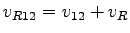
Determining the capacity of the merge area is the second step of the
analysis.
The capacity of a merge area is determined by the capacity of the
downstream freeway segment.
Thus, the total flow arriving on the upstream freeway and the on-ramp
cannot exceed the basic freeway capacity of the departing downstream freeway
segment.
 |
(1) |
Two conditions may occur in a given analysis:
- The total departing freeway flow, given as
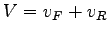 , is greater
than the capacity of the down steam freeway segment, and hence the LOS is F and
queuing is expected on the freeway. , is greater
than the capacity of the down steam freeway segment, and hence the LOS is F and
queuing is expected on the freeway.
- Flow entering the ramp influence area exceeds its capacity but total
departing freeway flow is within capacity. This may result in in local high
densities and queuing is not expected on the freeway.
Determining the level of service (LOS) of the merge area is the third step in
merge area analysis.
LOS depends on the density in the influencing area.
HCM 2000 provides the equation to estimate the density in the merge influence
area.
 |
(2) |
where,
 is the density of merge influence area (pc/km/ln), is the density of merge influence area (pc/km/ln),
 is the on-ramp peak 15-min flow rate (pc/h), is the on-ramp peak 15-min flow rate (pc/h),
 is the length of acceleration lane (m), is the length of acceleration lane (m),
 is the flow rate entering ramp influence area (pc/h), and is the flow rate entering ramp influence area (pc/h), and
 , ,  , ,  , and , and  are constants. are constants.
Table 1:
LOS criteria for merge and diverge areas
| LOS |
Density (pc/km/lane) |
| A |
 6 6 |
| B |
6 - 12 |
| C |
12 - 17 |
| D |
17 - 22 |
| E |
 22 22 |
| F |
Demands exceeds capacity |
|
|
| | |
|
|
|


