To model the ramp influence area, a length of 450 m just upstream (for off
ramp) and downstream (for on ramp) is considered to be affected.
The input data required is the geometric data of the freeway and the ramp and
the demand flow.
The three steps of design are:
The flow entering lanes 1 and 2 of the freeway upstream of merge area or
diverge area is first determined.
The capacity of the freeway, ramp and merge and diverge areas are
determined and checked with limiting values to determine the chance of
occurrence of congestion.
The density in the ramp influence area is then found out and depending on
the value f this variable, the level of service is determined.
From design point of view analysis of merge area and diverge area are treated
separately but follows the same basic principle already explained.
The Merging influence area is the area where increase in local density,
congestion, and reduced speeds is generally observed due to merging traffic
from ramps.
The ramp contributing traffic to the freeway is called an ON ramp.
The analysis of the merging influence area is done to find out the level of
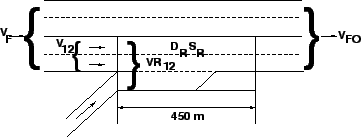
service of the ON ramp (Figure 1).
The analysis of merge area is done in following three primary steps:
Figure 1:
Schematic view of a typical merging area
The first step of the merge area analysis is to predict the flow entering
lanes 1and 2 of the freeway ().
The terms used in above figure are explained below.
is influenced by the following factors:
Total freeway flow approaching merge area () (pc/h): The total
approach flow is the most important influencing factor for the flow remaining
in lanes 1 and 2 of the freeway.
Total Ramp Flow (): This is the total flow on the ramp which
ultimately enters the freeway to merge with existing flow.
Total length of acceleration lane: A longer acceleration lane reduces the
turbulence and hence the density in the influence area of the ramp. The flow in
the lanes 1 and 2 thus are higher.
Free- flow speed of ramp at point of merge area: Higher the free flow
speed of ramp vehicles, vehicles on freeway tend to move away from merging flow
to avoid high speed turbulence.
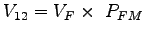
HCM 2000 provides model for predicting at on-ramps as given below:
(1)
where is the flow rate in lane 1 and 2 of freeway entering ramp
influence area (pc/h),
is the total freeway flow approaching merge area, and
is the Proportion of approaching freeway flow remaining in lanes 1 and
2 immediately upstream of merge.
For four lanes freeway (2 lanes in each direction) = 1.00


 ).
The terms used in above figure are explained below.
).
The terms used in above figure are explained below.
 ) (pc/h): The total
approach flow is the most important influencing factor for the flow remaining
in lanes 1 and 2 of the freeway.
) (pc/h): The total
approach flow is the most important influencing factor for the flow remaining
in lanes 1 and 2 of the freeway.
 ): This is the total flow on the ramp which
ultimately enters the freeway to merge with existing flow.
): This is the total flow on the ramp which
ultimately enters the freeway to merge with existing flow.
 is the Proportion of approaching freeway flow remaining in lanes 1 and
2 immediately upstream of merge.
For four lanes freeway (2 lanes in each direction)
is the Proportion of approaching freeway flow remaining in lanes 1 and
2 immediately upstream of merge.
For four lanes freeway (2 lanes in each direction)