9. WASTE DISPOSAL; EVALUATION AND MANAGEMENT OF CONTAMINATED SITES
9.1 INTRODUCTION
What is waste?
Waste is any plastics, paper, glass, metal, foods, chemicals, wood, oil, soil, effluents, liquids that have been discarded. How the waste gets generated is from commercial, household and industrial sources. Sewage sludge is another source. Domestic and municipal waste is generated by the consumption of goods, manufacturing, sewage treatment, agriculture, the production & disposal of hazardous substances and construction. They are essential parts of the process of production as the emission of carbon dioxide by human is part of breathing process. From time immemorial, waste disposal has been a problem, and after industrialization the problem has only compounded. In the past, trash was carried to the outskirts of cities and discarded in the open, but now that can no longer be done. Over time, various waste disposal methods have been devised, like compost, burning, landfill, biological reprocessing, etc. However, before going to these details, we need to understand the different kinds of wastes.
Types of Wastes
There are basically three types of wastes generated and they are classified based on their chemical, biological and physical characteristics viz:
a) Solid wastes include materials like mining wastes and industrial wastes besides household garbage.
b) Liquid wastes are those in which the composition of solids is less than 1% and there is a high concentration of metals and salts.
c) Sludge contains a mixture of solid and water.
What is Waste Disposal?
Waste Disposal is the management of waste to prevent harm to the environment, injury or long term progressive damage to health. Disposal of waste is where the intention is topermanently store the waste for the duration of its biological and chemical activity, such that it is rendered harmless. Disposal of wastes can be made to three locations namely surface water, atmosphere and land. The land represents not only the appropriate disposal medium for many wastes but also provides opportunity to manage wastes with a minimum of adverse environmental effects. Disposal of waste could be done through the following methods.
Methods of Waste disposal
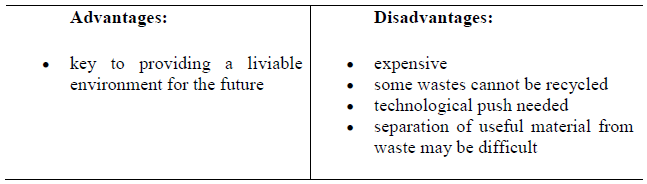
1. Integrated waste management (IWM)
Integrated waste management using LCA (life cycle analysis) attempts to offer the best option for waste management. IWM entails using a combination of techniques and programmes to manage the municipal/urban waste stream.
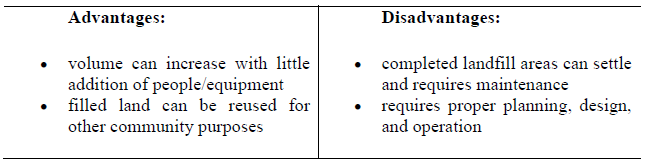
2. Landfill
Disposing of waste in a landfill involves burying the waste, and this remains a common practice in most countries. Landfills were often established in abandoned or unused quarries, mining voids or borrow pits. A properly designed and well-managed landfill can be a hygienic and relatively inexpensive method of disposing of waste materials.
3. Incineration
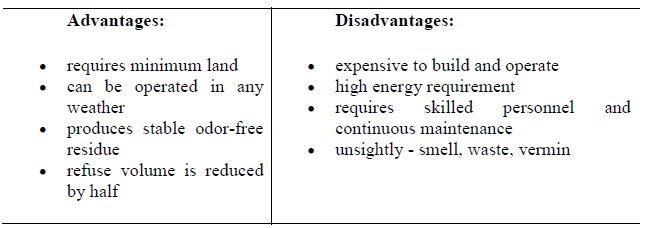
Incineration is a disposal method in which solid organic wastes are subjected to combustion so as to convert them into residue and gaseous products. This method is useful for disposal of residue of both solid waste management and solid residue from waste water management.
4. Recycling
Recycling refers to the collection and reuse of waste materials such as empty beverage containers. The materials from which the items are made can be reprocessed into new products. Material for recycling may be collected separately from general waste using dedicated bins and collection vehicles, or sorted directly from mixed waste streams.