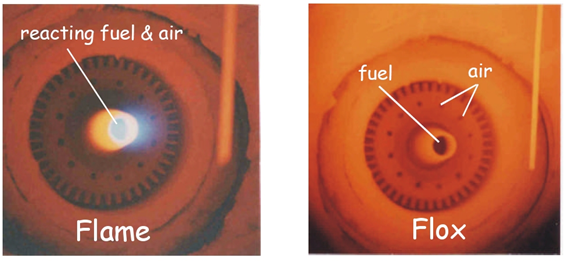
The problem inherent in this approach is that fuel combustion may not be complete, resulting in the release of unburned carbon (soot) and unburned hydrocarbons and the formation of carbon monoxide.
To deal with this problem, low-excess-air firing is usually conducted as a two-stage process. In stage one, combustion takes place at a high temperature that promotes complete combustion of the fuel, but in an atmosphere with just less than sufficient quantities of oxygen to burn all available fuel.
In such conditions, very little NOx is formed because of inadequate amounts of oxygen. In the second stage, fuel combustion is completed at a lower temperature in excess amounts of air.
Under these conditions, NOx does not form because of the low temperature, although combustion of the fuel can proceed efficiently enough to prevent release of soot, unburned hydrocarbons, and carbon monoxide.
General Methods For Control Of NOx Emissions
- NOx control can be achieved by:
- Fuel Denitrogenation
- Combustion Modification
- Modification of operating conditions
- Tail-end control equipment
- Selective Catalytic Reduction
- Selective Non - Catalytic Reduction
- Electron Beam Radiation
- Staged Combustion
Fuel Denitrogenation
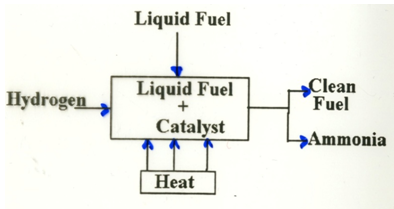
- One approach of fuel denitrogenation is to remove a large part of the nitrogen contained in the fuels. Nitrogen is removed from liquid fuels by mixing the fuels with hydrogen gas, heating the mixture and using a catalyst to cause nitrogen in the fuel and gaseous hydrogen to unite. This produces ammonia and cleaner fuel.
- This technology can reduce the nitrogen contained in both naturally occurring and synthetic fuels.
Combustion Modification
- Combustion control uses one of the following strategies:
- Reduce peak temperatures of the flame zone. The methods are :
- increase the rate of flame cooling
- decrease the adiabatic flame temperature by dilution
- Reduce residence time in the flame zone. For this we change the shape of the flame zone
- Reduce Oxygen concentration in the flame one. This can be accomplished by:
- decreasing the excess air
- controlled mixing of fuel and air
- using a fuel rich primary flame zone