4.18.2. Central Role of RNA
- The Three Roles of RNA in Protein Synthesis
Although DNA stores the information for protein synthesis and RNA carries out the instructions encoded in DNA, most biological activities are carried out by proteins. The accurate synthesis of proteins thus is critical to the proper functioning of cells and organisms. We saw in Chapter 3 that the linear order of amino acids in each protein determines its three-dimensional structure and activity. For this reason, assembly of amino acids in their correct order, as encoded in DNA, is the key to production of functional proteins.
Three kinds of RNA molecules perform different but cooperative functions in protein synthesis (Figure 4.24): - Messenger RNA (mRNA) carries the genetic information copied from DNA in the form of a series of three-base code “words,” each of which specifies a particular amino acid.
- Transfer RNA (tRNA) is the key to deciphering the code words in mRNA. Each type of amino acid has its own type of tRNA, which binds it and carries it to the growing end of a polypeptide chain if the next code word on mRNA calls for it. The correct tRNA with its attached amino acid is selected at each step because each specific tRNA molecule contains three-base sequences that can base-pair with its complementary code word in the mRNA.
- Ribosomal RNA (rRNA) associates with a set of proteins to form ribosome. These complex structures, which physically move along an mRNA molecule, catalyze the assembly of amino acids into protein chains. They also bind tRNAs and various accessory molecules necessary for protein synthesis. Ribosomes are composed of a large and small subunit, each of which contains its own rRNA molecule or molecules.
- Translation is the whole process by which the base sequence of an mRNA is used to order and to join the amino acids in a protein. The three types of RNA participate in this essential protein-synthesizing pathway in all cells; in fact, the development of the three distinct functions of RNA was probably the molecular key to the origin of life.
- RNA viruses and viroids have genomes made of RNA
- RNA polymerase can begin new strands
- But DNA polymerase cannot start new strands
- Primers made of RNA must be used to start new strands of DNA
- Small RNA guide molecules are used for:
- Removal of introns
- Modification and editing of messenger RNA
- Extending ends of eukaryotic chromosomes by telomerase
- Ribozymes are RNA molecules that act as enzymes:
- Most important is large ribosomal RNA
- (23S rRNA in bacteria, 28S rRNA in eukaryotes)
- This links the amino acids together to form the polypeptide chain
- RNA may directly control gene expression
- Small regulatory RNA may control transcription and translation
- Riboswitches bind small molecules
- RNA interference:
- Novel mechanism - purpose is to destroy hostile virus RNA
- Widely used in research to inactivate genes in animals and plants
- Not found in bacteria
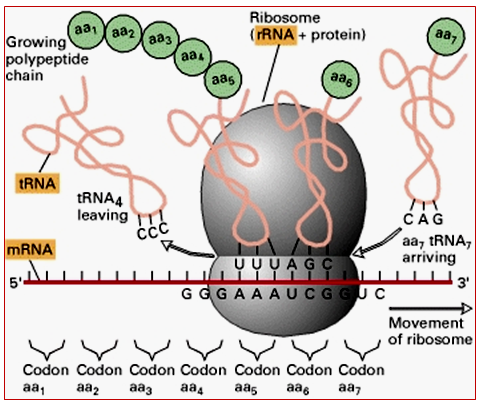
Figure 4.24: The three roles of RNA in protein synthesis