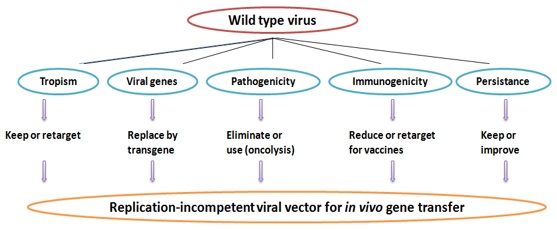
Figure 5-1.3.2(b): Modifications required for the generation of replication-defective viral vectors from wild type virus for in vivo gene transfer.
(Adapted and modified from Bouard D, Alazard-Dany N, Cosset F-L. 2009. Viral vectors: from virology to transgene expression. British Journal of Pharmacology, 157: 153–165.)
- If the transgene is added to the genome or replaces one or more non-essential genes for the infection cycle in the expression host, the vector is described as replication-competent or helper-independent, as it can propagate independently e.g. helper independent adenoviral vectors.
- However, if the transgene replaces an essential viral gene, this renders the vector replication-defective or helper-dependent, so that missing functions must be supplied in trans. This can be accomplished by co-introducing a helper virus or transfecting the cells with a helper plasmid, each of which carry the missing genes e.g. helper dependent retroviruses (Figure 5-1.3.2(b)).
- An alternative to the co-introduction of helpers is to use a complementary cell line, which is transformed with the appropriate genes called as ‘packaging lines'.
- The vectors from which all viral coding sequences have been deleted and depend on a helper virus which can provide viral gene products in trans for packaging and vector DNA replication are known as `gutless vectors' .
Advantages
- High capacity for foreign DNA
- The vector has no intrinsic cytotoxic effects.