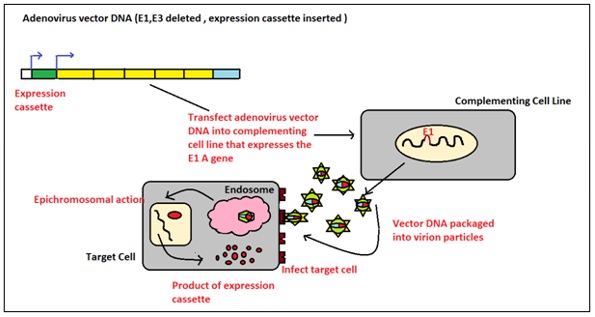
Figure 5-1.4.1(b):. Adenovirus vectors in gene transfer.
Role in gene therapy
- Mainly used for cancer treatment. Gendicine, a recombinant adenovirus, is the first gene therapy product to be licensed for cancer treatment.
Advantages of Adenoviral vectors
• High transduction efficiency
• Insert size up to 8 kilobases
• Generation of high virus titres
• High level of expression in a wide variety of cell types
• No mutagenic effects due to lack of random integration into the host genome.
Disadvantagesof Adenoviral vectors
• Transient expression due to lack of integration into the host.
• Pathogenic to humans.
5-1.4.2. Adeno-associated virus
• It was first discovered as a contaminant in an adenoviral isolate in 1965.
• It is a small, non-enveloped virus packaging a linear single stranded DNA belonging to Parvovirus family.
• It is naturally replication defective thus requiring a helper virus (usually adenovirus or herpes virus) for productive infection.
• In human cells, the provirus integrates predominantly into a 4-kb region (AAVS1) on chromosome 19. Subsequent infection by adenovirus or herpes virus can ‘rescue' the provirus and induce lytic infection.