Proton pump
The proton pump is a transmembrane protein that is capable of transport of protons across the cell membrane, mitochondria and other cell organelle.
ATP dependent proton pumps
ATP dependent proton pumps or transport ATPase are the pumps that transport H+ ions against their concentration gradients. These pumps are transmembrane proteins with one or more binding sites for ATP located on the cytosolic face of the membrane and these proteins are called ATPases. They normally do not hydrolyze ATP into ADP and Pi unless H+ ions are simultaneously transported. Because of this tight coupling between ATP hydrolysis and transport, the energy stored in the phosphoanhydride bond is not dissipated but rather used to move ions or other molecules uphill against an electrochemical gradient.
ATP dependent proton pumps can be categorized into different classes. Generally, ATP dependent proton pumps are divided into 4 classes:
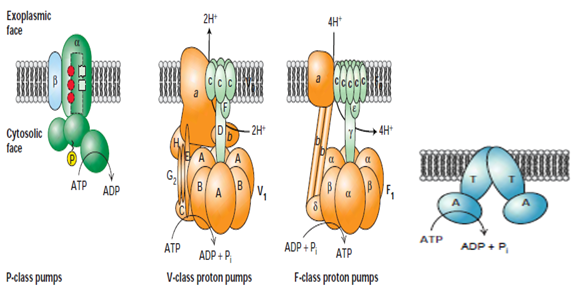
Figure 1: Different types of ATP dependent proton pumps
1. P-class ion pumps
These are multipass transmembrane proteins having two identical catalytic α-subunits that contain an ATP binding site. Some have two smaller β-subunits that usually have regulatory functions. During the transport process or pumping cycle at least one of the α-subunit must be phosphorylated and the H+ ions are thought to move through the phosphorylated subunit. This class includes many ion pumps that are responsible for setting up and maintaining gradients of Na+, K+, H+ and Ca2+ across the cell membrane.
a) The common P-type pump is mostly found in parietal cells of the mammalian stomach which transport protons (H+ ions) out of cell and K+ ions into the cell and is mainly responsible for the acidification of the stomach contents. The pump is known as H+/K+ ATPase. It is a heterodimeric protein. The H+/K+ ATPase transports one H+ from the cytoplasm of the parietal cell in exchange for one K+ retrieved from the gastric lumen. As an ion pump the H+/K+ ATPase is able to transport ions against a concentration gradient using energy derived from the hydrolysis of ATP. Like all P-type ATPases, a phosphate group is transferred from ATP to the H+/K+ ATPase during the transport cycle.
b) Another example of P-type pump is Na+/K+ ATPase in the plasma membrane, which generates low cytosolic Na+ and high cytosolic K+ concentration which is typical of animal cells (discussed in earlier lecture).
c) Certain Ca2+ ATPase pump Ca2+ ions out of the cytosol into the external medium while others pump Ca2+from the cytosol into the endoplasmic recticulum or into the specialized sarcoplasmic reticulum, which is more common in muscle cells (discussed in earlier lecture).