Vacuolar membrane:
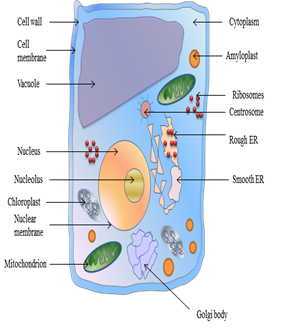
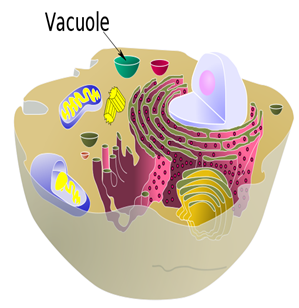
Vacuoles are the membrane bound sac within the cytoplasm which are filled with water containing organic and inorganic molecules including enzymes and mostly present in plants, fungi and some animals. This vacuole slowly develops as the cell matures by fusion of smaller vacuoles (vesicles) derived from the endoplasmic reticulum and Golgi apparatus.
 |
 |
| Figure 4: Plant cell structure |
Figure 5: Animal cell structure |
Function of vacuoles:
-
• Acts as storage organelles and contains water and small molecules. Stores salts, minerals, nutrients, proteins, pigments, helps in plant growth, and plays an important structural role for the plant.
• Maintains internal hydrostatic pressure or turgor pressure within the cell
• Maintains an acidic internal pH
• Allows plants to support structures such as leaves and flowers due to the pressure of the central vacuole. Also maintains turgor pressure against the cell wall. Because of osmosis, water diffuses into the vacuole, and exerting pressure on the cell wall. And water loss leads to shrinkage of the cell. Hence turgor pressure needs to be maintained. Turgor pressure also dictates the rigidity of the cell and is associated with the difference between the osmotic pressure inside and outside of the cell.
• In seeds, stored proteins needed for germination are kept in protein bodies, which are modified vacuole.
• Regulating the movements of ions around the cell.
• Transports proton from cytosol to vacuole and hence stabilizes cytoplasmic pH making the vacuolar interior most acidic by creating a proton motive force which in turn used for the transport of nutrients into and out of the cell and allows degradative enzymes to act.
• Vacuoles also often store the pigments that give certain flowers their colors, which aid them in the attraction of bees and other pollinators, but also can release molecules that are poisonous, odoriferous, or unpalatable to various insects and animals, thus discouraging them from consuming the plant.
Plant vacuoles:
Most of the plant cell contains large, single central vacuoles and can occupy at least 30% to 80% of the cell. Generally vacuole is surrounded by membrane known as tonoplast, or vacuolar membrane. It separates the vacuolar contents from cell’s cytoplasm and an important and highly integrated component of the plant internal membrane network (endomembrane) system. The vacuole solution (also known as cell sap) differs markedly from that of the surrounding cytoplasm.