Lysosome and vacuolar membrane
In earlier lecture we have studied about plasma membrane. However some cell organelles have modified membrane depending on the function which they perform. We will study the membrane of a lysosome and vacuoles in detail in this lecture.
Lysosome:
Lysosomes are central, acidic and membrane bound organelles that contain hydrolase enzyme for the breakdown of all types of biological polymers - proteins, nucleic acids, carbohydrates and lipids. They are mostly found in animal cells, while in yeast and plants, it acts as lytic vacuoles. It is enclosed by membrane known as lysosomal membrane that maintains the digestive enzyme at pH 4.5. Figure 1 shows the structure of lysosome.
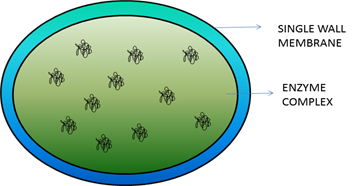
Figure 1: Lysosome
Functions of lysosomes:
-
• Maintains pH by pumping protons from cytosol across the membrane via proton pumps and chloride ion channels.
• Protects the cytosol and rest of the cells from degradative enzymes within the lysosome.
• Acts as digestive system of the cell, serving both to degrade material taken up from the outside of the cell and to digest obsolete components of cell itself.
• Sequestration of lysosomal enzymes.
• Mediation of fusion events between lysosomes and other organelles.
• Transport of degradation products to the cytoplasm
Lysosomal Membrane: To perform its function with efficacy the lysosomal membrane needs some additional features in its membrane. It is slightly thicker than that of the plasma membrane. It contains substantial amounts of carbohydrate component, particularly sialic acid. In fact, most lysosomal membrane proteins are highly glycosylated, which may help protect them from the lysosomal proteases in the lumen. The lysosomal membrane has another unique property of fusing with other membranes of the cell. This property of fusion has been attributed to the high proportion of membrane lipids present in the micellar configuration. Surface active agents such as liposoluble vitamins (A,K,D and E) and steroid sex hormones have a destabilizing influence, causing release of lysosomal enzymes due to rupture of lysosomal membranes. Drugs like cortisone, hydrocortisone and others tend to stabilize the lysosomal membrane and have an anti-inflammatory effect on the tissue. The entire process of digestion is carried out within the lysosome. Most lysosomal enzymes act in an acid medium. Acidification of lysosomal contents depends on an ATP-dependent proton pump which is present in the membrane of the lysosome and accumulates H+ inside the organelle. Lysosomal membrane also contains transport proteins that allow the final products of digestion of macromolecules to escape so that they can be either excreted or reutilized by the cell.
Lysosomal membrane composition:
The V-class H+ ATPase pump is generally present in lysosomal membrane. This class of ATPase pump only transports H+ ions. Its main function is to acidify the lumen of the organelles. The proton gradient between the lysosomal lumen (pH ≈4.5–5.0) and the cytosol (pH ≈7.0) depends on ATP production by the cell.
These V-class proton pumps contain two domains: a cytosolic hydrophilic domain (V1) and a transmembrane domain (V0) with multiple subunits in each domain. Binding and hydrolysis of ATP by the B subunits in V1 provides the energy for pumping of H+ ions through the proton-conducting channel formed by the c and a subunits in V0. These V-class proton pumps are not phosphorylated and dephosphorylated during proton transport. Figure 2 depicts a V-class proton pump.