Animal cells:
An animal cell is a form of eukaryotic cell that makes up many tissues in animals. Figure 7 depicts a typical animal cell. The animal cell is distinct from other eukaryotes, most notably plant cells, as they lack cell walls and chloroplasts, and they have smaller vacuoles. Due to the lack of a rigid cell wall, animal cells can adopt a variety of shapes, and a phagocytic cell can even engulf other structures. There are many different cell types. For instance, there are pproximately 210 distinct cell types in the adult human body.
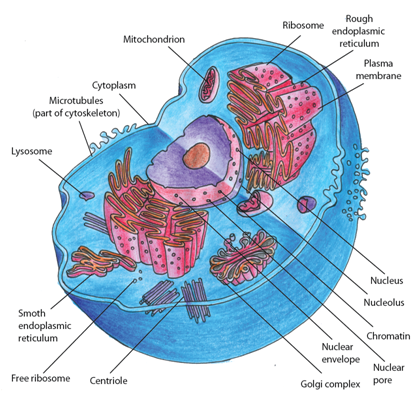
Figure 3: Schematic representation of a typical animal cell.
Cell organelles in animal cell:
Cell membrane: Plasma membrane is the thin layer of protein and fat that surrounds the cell, but is inside the cell wall. The cell membrane is semipermeable, allowing selective substances to pass into the cell and blocking others.
Nucleus: They are spherical body containing many organelles, including the nucleolus. The nucleus controls many of the functions of the cell (by controlling protein synthesis) and contains DNA (in chromosomes). The nucleus is surrounded by the nuclear membrane and possesses the nucleolus which is an organelle within the nucleus - it is where ribosomal RNA is produced.
Golgi apparatus: It is a flattened, layered, sac-like organelle involved in packaging proteins and carbohydrates into membrane-bound vesicles for export from the cell.
Ribosome and Endoplasmic reticulum: Ribosomes are small organelles composed of RNA-rich cytoplasmic granules that are sites of protein synthesis and Endoplasmic reticulum are the sites of protein maturation and they can be divided into the following types:
a. Rough endoplasmic reticulum: These are a vast system of interconnected, membranous, infolded and convoluted sacks that are located in the cell's cytoplasm (the ER is continuous with the outer nuclear membrane). Rough ER is covered with ribosomes that give it a rough appearance. Rough ER transport materials through the cell and produces proteins in sacks called cisternae (which are sent to the Golgi body, or inserted into the cell membrane).
b. Smooth endoplasmic reticulum: These are a vast system of interconnected, membranous, infolded and convoluted tubes that are located in the cell's cytoplasm (the ER is continuous with the outer nuclear membrane). The space within the ER is called the ER lumen. Smooth ER transport materials through the cell. It contains enzymes and produces and digests lipids (fats) and membrane proteins; smooth ER buds off from rough ER, moving the newly-made proteins and lipids to the Golgi body and membranes.
Mitochondria: These are spherical to rod-shaped organelles with a double membrane. The inner membrane is infolded many times, forming a series of projections (called cristae). The mitochondrion converts the energy stored in glucose into ATP (adenosine triphosphate) for the cell.