Plant cell types
Parenchyma cells: These are living cells that have diverse functions ranging from storage and support to photosynthesis and phloem loading (transfer cells). Apart from the xylem and phloem in its vascular bundles, leaves are composed mainly of parenchyma cells. Some parenchyma cells, as in the epidermis, are specialized for light penetration and focusing or regulation of gas exchange, but others are among the least specialized cells in plant tissue, and may remain totipotent, capable of dividing to produce new populations of undifferentiated cells, throughout their lives. Parenchyma cells have thin, permeable primary walls enabling the transport of small molecules between them, and their cytoplasm is responsible for a wide range of biochemical functions such as nectar secretion, or the manufacture of secondary products that discourage herbivory. Parenchyma cells that contain many chloroplasts and are concerned primarily with photosynthesis are called chlorenchyma cells. Others, such as the majority of the parenchyma cells in potato tubers and the seed cotyledons of legumes, have a storage function (Figure 2a).
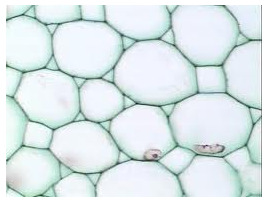
Figure 2a: Parenchyma cells which have thin primary cell wall.
Collenchyma cells: Collenchyma cells (Figure 2b) are alive at maturity and have only a primary wall. These cells mature from meristem derivatives that initially resemble parenchyma, but differences quickly become apparent. Plastids do not develop, and the secretory apparatus (ER and Golgi) proliferates to secrete additional primary wall. The wall is most commonly thickest at the corners, where three or more cells come in contact, and thinnest where only two cells come in contact, though other arrangements of the wall thickening are possible. Pectin and hemicellulose are the dominant constituents of collenchyma cell walls of dicotyledon angiosperms, which may contain as little as 20% of cellulose in Petasites. Collenchyma cells are typically quite elongated, and may divide transversely to give a septate appearance. The role of this cell type is to support the plant in axes still growing in length, and to confer flexibility and tensile strength on tissues. The primary wall lacks lignin that would make it tough and rigid, so this cell type provides what could be called plastic support – support that can hold a young stem or petiole into the air, but in cells that can be stretched as the cells around them elongate. Stretchable support (without elastic snap-back) is a good way to describe what collenchyma does. Parts of the strings in celery are collenchymas (Figure 2b).
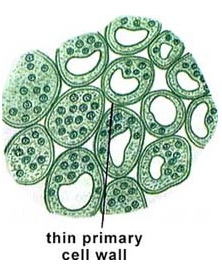
Figure 2b: Typical collenchyma cell.
Sclerenchyma cells: Sclerenchyma cells (from the Greek skleros, hard) are hard and tough cells with a function in mechanical support. They are of two broad types – sclereids or stone cells and fibres. The cells develop an extensive secondary cell wall that is laid down on the inside of the primary cell wall. The secondary wall is impregnated with lignin, making it hard and impermeable to water. Thus, these cells cannot survive for long' as they cannot exchange sufficient material to maintain active metabolism. Sclerenchyma cells are typically dead at functional maturity, and the cytoplasm is missing, leaving an empty central cavity.
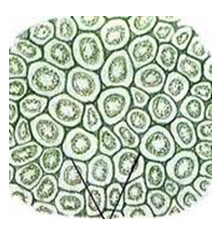
Figure 2c: Sclerenchyma cells with irregularly thickened cell wall.