Even though a lot of the concepts here have been discussed earlier, they are repeated for convenience.
Broadly memories can be classified into
RAM (Random Access Memory)
Serial Memory
A RAM is one in which the time required for accessing the information and retrieving the information is independent of the physical location of the information. In contrast, in a Serial memory, the data is available only in the same form as it was stored previously.
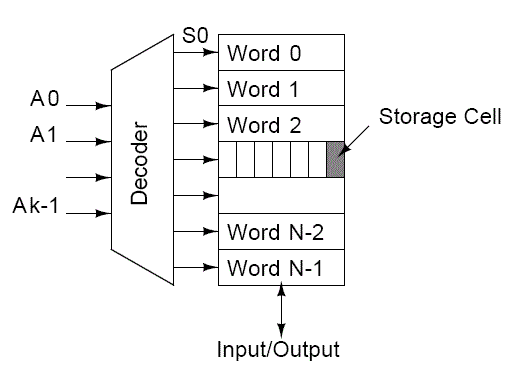
The following diagram shows the organization of a Memory
Fig 30.11: Organization of Memory
This memory consists of two address decoders viz. Row and Column decoders to select a particular bit in the memory. If there are M rows and N columns, then the number of bits that can be accessed are . Either a read operation or a write operation can be done on any selected bit by the use of control signals.

 . Either a read operation or a write operation can be done on any selected bit by the use of control signals.

