Raman Spectroscopy:
As a result, the molecules vibrate with the characteristic frequency, vm, i.e., monochromatic laser light with frequency, v0 , excites molecules and transforms them into oscillating dipoles, which emit light of three frequencies as shown in Figure 39.01.
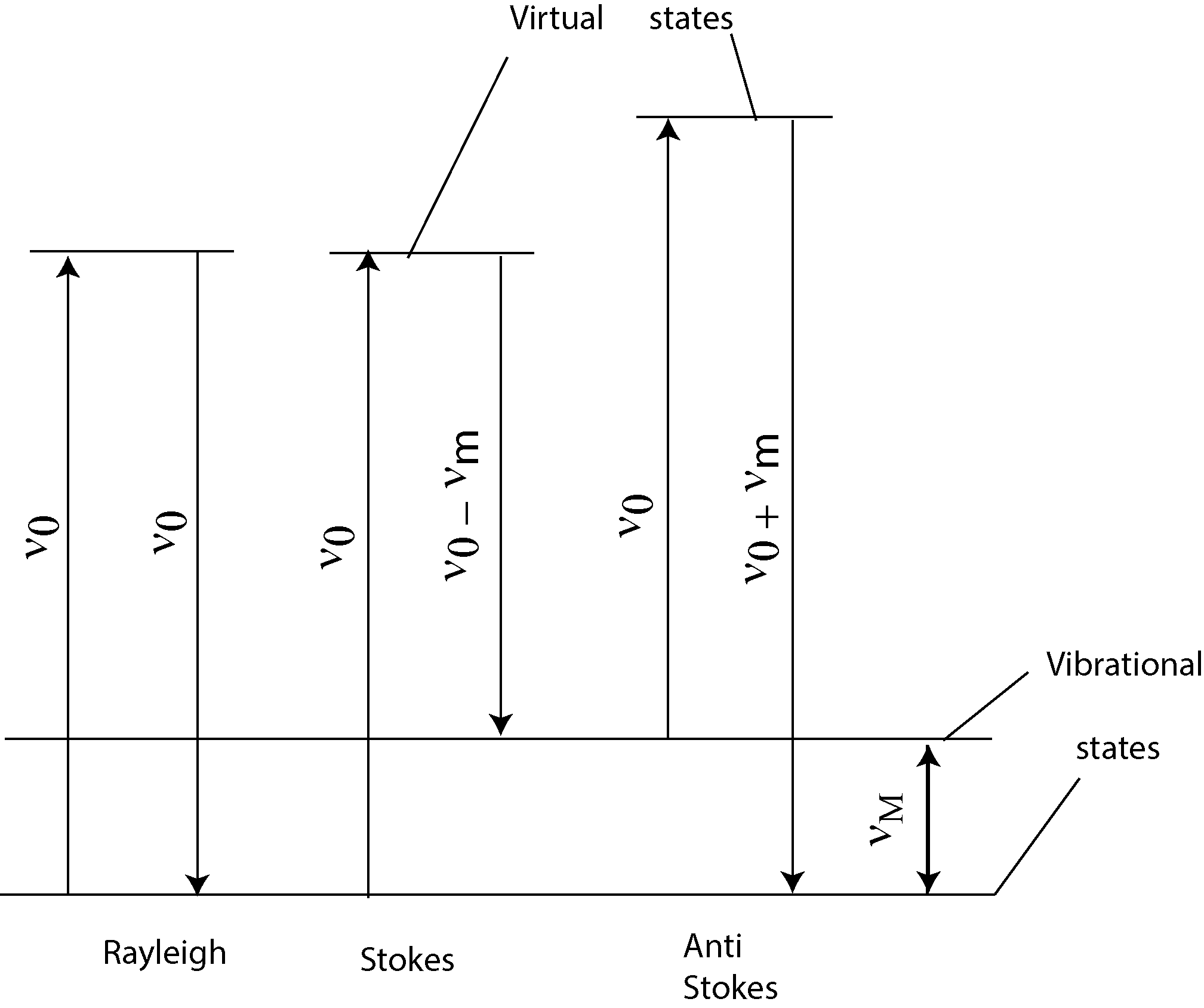
Figure 39.01: Translational scheme of Raman effect.
1. A molecule with no Raman active modes absorbing a photon with the frequency v0 returns back to same basic vibrational state after emitting light with the same frequency v0. Such type of interaction is called as elastic Rayleigh's scattering.
2. Similarly, let us consider a photon with frequency v0 is absorbed by Raman active molecule in its basic vibrational mode. As a result, part of the photon's energy is transferred to Raman active mode with frequency vm and the resulting frequency of scattered light is reduced to v0 - vm, which is typically referred as Stokes frequency or simply Stokes.