4. Gear motor: a rotary actuator
Rotary actuators convert energy of pressurized fluid into rotary motion. Rotary actuators are similar to electric motors but are run on hydraulic or pneumatic power.
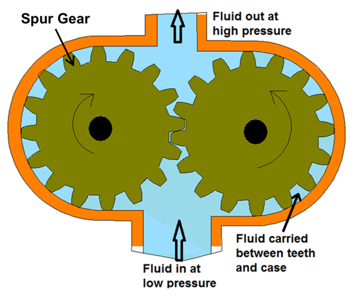
Fig. 6.4.4 Gear motor
It consists of two inter meshing gears inside a housing with one gear attached to the drive shaft. Figure 6.4.4 shows a schematic diagram of Gear motor. The air enters from the inlet, causes the rotation of the meshing gear due to difference in the pressure and produces the torque. The air exists from the exhaust port. Gear motors tend to leak at low speed, hence are generally used for medium speed applications.
5. Vane motor: a rotary actuator
A rotary vane motor consists of a rotor with sliding vanes in the slots provided on the rotor (Fig. 6.4.5). The rotor is placed eccentrically with the housing. Air enters from the inlet port, rotates the rotor and thus torque is produced. Air is then released from the exhaust port (outlet).
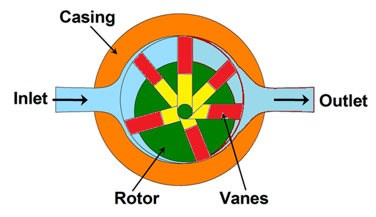
Fig. 6.4.5 Vane motor
6. Limited rotation actuators
It consists of a single rotating vane connected to output shaft as shown in Figure 6.4.6. It is used for double acting operation and has a maximum angle of rotation of about 270°. These are generally used to actuate dampers in robotics and material handling applications. Other type of limited rotation actuator is a rack and pinion type actuator.
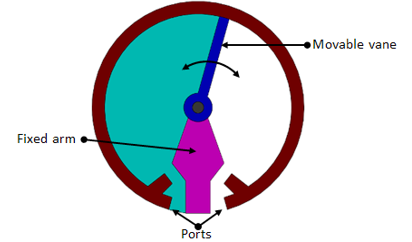
Fig. 6.4.6 Semi rotary vane type actuator