Adiabatic Flame Temperature
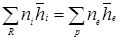
If a combustion process occurs adiabatically in the absence of work transfer or changes in K.E. and P.E., then the energy equation becomes
HR = HP |
(3.103) |
or,
|
(3.104) |
or,
|
(3.105) |
or,
|
(3.106) |

For such a process, the temperature of the products is called the adiabatic flame temperature which is the maximum temperature achieved for the given reactants. The adiabatic flame temperature can be controlled by the amount of excess air supplied; it is the maximum with a stoichiometric mixture. Since the maximum permissible temperature in a gas turbine is fixed from metallurgical considerations, close control of the temperature of the products is achieved by controlling the excess air. For a given reaction the adiabatic flame temperature is computed by trial and error. The energy of the reactants HR being known, a suitable temperature is chosen for the products so that the energy of products at that temperature becomes equal to the energy of the reactants.
Enthalpy and internal energy of combustion: Heating value
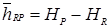
The enthalpy of combustion is defined as the difference between the enthalpy of the product and the enthalpy of the reactants when complete combustion occurs at a given temperature and pressure. Therefore,
|
(3.107) |
or,
|
(3.108) |

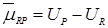
where  is the enthalpy of combustion (kJ/kg or kJ/kgmol) of fuel. The value of the enthalpy of combustion of different hydrocarbon fuels at 25° C, 1 atm are given in Table 3.6. The internal energy of combustion, μR.P. is defined similar way.
|
(3.109) |
|
(3.110) |

If all the gaseous constituents are considered ideal gases and the volume of liquid and solid considered is assumed to be negligible compared to gaseous volume.
|
(3.111) |

In the case of a constant pressure or steady flow process, the negative of the enthalpy of combustion is frequently called the heating value at constant pressure, which represents the heat transferred from the chamber during combustion at constant pressure. Similarly, the negative of the internal energy of combustion is sometimes designated as the heating value at constant volume in the case of combustion, because it represents the amount of heat transfer in the constant volume process. The higher heating value (HHV) or higher calorific value (HCV) is the heat transferred when H2O in the products is in the liquid state. The lower heating value (LHV) or lower calorific value (LCV) is the heat transferred in the reaction when H2O in the products is in the vapour state. Therefore,
|
(3.112) |

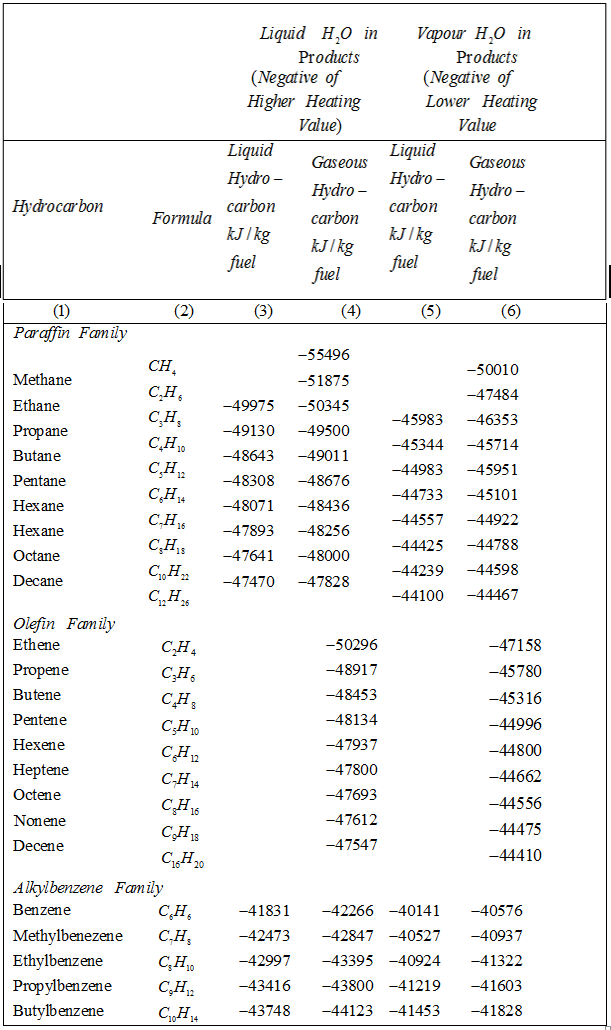
where  is the mass of water formed in the reaction.