Series Brake - Optimal Energy Recovery
The principle of the series braking system with optimal energy recovery is to recover the braking energy as much as possible in the condition of meeting the total braking force demanded for the given deceleration. This principle is illustrated in Figure 2 .
When the vehicle is braked with an acceleration rate of j/g<μ, the braking forces on the front and rear wheels can be varied in a certain range, as long as the 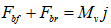 is satisfied. This variation range of the front and rear axles is shown in Figure 2 by the thick solid line ab, where μ=0.9 and
j/g=0.7. In this case, regenerative braking should be used in priority. If the available regenerative braking force (maximum braking force produced by the electric motor) is in this range (point c in Figure 2 , for example), the braking force on the front wheels should be developed only by regenerative braking without mechanical braking. The braking force on the rear wheels, represented by point e, should be developed in order to meet the total braking force requirement. If, on the same road, the available regenerative braking force is less than the value corresponding to point a(e.g.
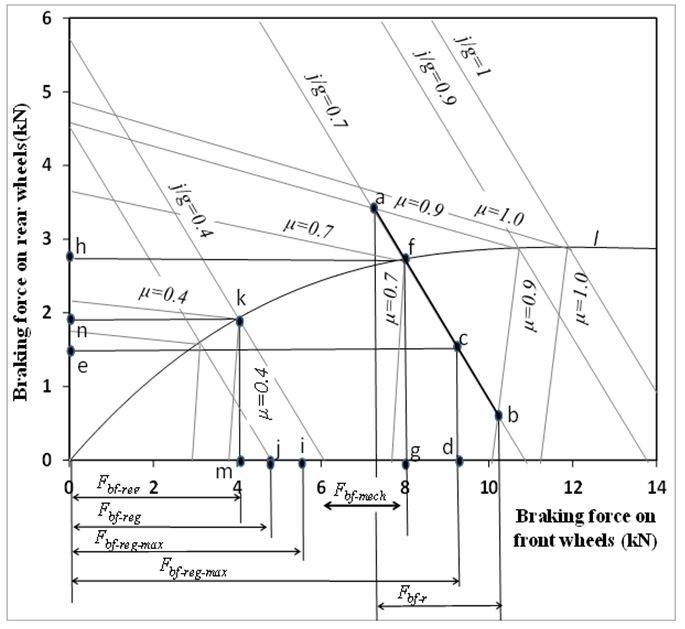
Figure 2: Demonstration of series braking — optimal energy recovery [1]
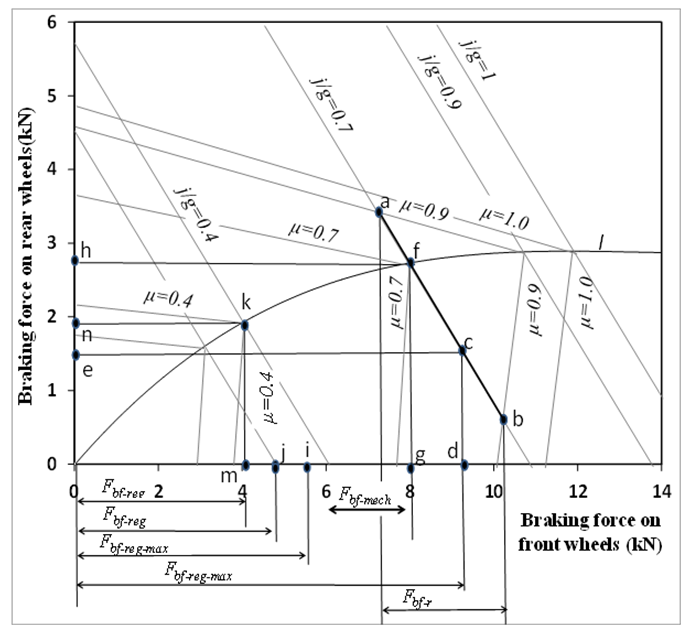
Figure 2: Demonstration of series braking — optimal energy recovery
point i in Figure 2 ), the electric motor should be controlled to produce its maximum regenerative braking force. The front and rear braking forces should be controlled at point ƒ so as to optimize the driver feel and reduce braking distance. In this case, additional braking force on the front wheels must be developed by mechanical braking by the amount represented by  , and the braking force on the rear axle is represented by point h.
When the commanded deceleration rate, j/g , is much smaller than the road adhesive coefficient
( j/g = 0.3 in Figure 2 for example), and the regenerative braking force can meet the total braking force demand, only regenerative braking is used without mechanical braking on the front and rear wheels (point j in Figure 2 ).
When the commanded deceleration rate, j/g, is equal to the road adhesive coefficient μ, the operating point of the front and rear braking forces must be on the curve I. On a road with a high adhesive coefficient ( μ=0.7 , operating point ƒ, in Figure 2 , for example), the maximum regenerative braking force is applied and the remaining is supplied by the mechanical brake. On a road with a low adhesive coefficient (μ=0.4 , operating point k, in Figure 2 , for example), regenerative braking alone is used to develop the front braking force.