| |
| | |
|
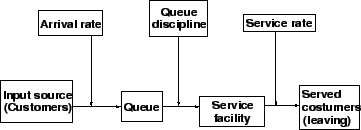
Figure 1 shows a schematic diagram illustrating the
concept of a queuing system.
Various components are discussed below.
Figure 1:
Components of a basic queuing system
 |
- Mean arrival rate
- Mean service rate
- The number of servers
- Queue discipline
These are explained in the following sections.
It is rate at which customers arrive at a service facility.
It is expressed in flow (customers/hr or vehicles/hour in transportation
scenario) or time headway (seconds/customer or seconds/vehicle in
transportation scenario).
If inter arrival time that is time headway (h) is known, the arrival rate can
be found out from the equation:
 |
(1) |
Mean arrival rate can be specified as a deterministic distribution or
probabilistic distribution and sometimes demand or input are substituted for
arrival.
It is the rate at which customers (vehicles in transportation scenario) depart
from a transportation facility.
It is expressed in flow (customers/hr or vehicles/hour in transportation
scenario) or time headway (seconds/customer or seconds/vehicle in
transportation scenario).
If inter service time that is time headway (h) is known, the service rate can
be found out from the equation:
 |
(2) |
The number of servers that are being utilized should be specified and in the
manner they work that is they work as parallel servers or series servers has to
be specified.
Queue discipline is a parameter that explains how the customers arrive at a
service facility.
The various types of queue disciplines are
- First in first out (FIFO)
- First in last out (FILO)
- Served in random order (SIRO)
- Priority scheduling
- Processor (or Time) Sharing
- First in first out (FIFO):
If the customers are served in the order of their arrival, then this is known
as the first-come, first-served (FCFS) service discipline.
Prepaid taxi queue at airports where a taxi is engaged on a first-come,
first-served basis is an example of this discipline.
- First in last out (FILO):
Sometimes, the customers are serviced in the reverse order of their entry so
that the ones who join the last are served first.
For example, assume that letters to be typed, or order forms to be processed
accumulate in a pile, each new addition being put on the top of them.
The typist or the clerk might process these letters or orders by taking each
new task from the top of the pile.
Thus, a just arriving task would be the next to be serviced provided that no
fresh task arrives before it is picked up.
Similarly, the people who join an elevator first are the last ones to leave it.
- Served in random order (SIRO):
Under this rule customers are selected for service at random, irrespective of
their arrivals in the service system.
In this every customer in the queue is equally likely to be selected.
The time of arrival of the customers is, therefore, of no relevance in such a
case.
- Priority Service:
Under this rule customers are grouped in priority classes on the basis of some
attributes such as service time or urgency or according to some identifiable
characteristic, and FIFO rule is used within each class to provide service.
Treatment of VIPs in preference to other patients in a hospital is an example
of priority service.
- Processor (or Time) Sharing:
The server is switched between all the queues for a predefined slice of time
(quantum time) in a round-robin manner.
Each queue head is served for that specific time.
It doesn't matter if the service is complete for a customer or not.
If not then it'll be served in it's next turn.
This is used to avoid the server time killed by customer for the external
activities (e.g. Preparing for payment or filling half-filled form ).
|
|
| | |
|
|
|


 )
) )
)