| |
| | |
|
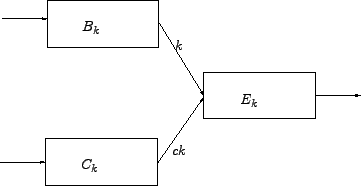
Consider two cells merging, here we have a beginning cell and its complimentary
merging into ending cell, the constraints on the flow that can be sent and
received are given by equation 1 and equation 1.
 |
|
|
(1) |
where,
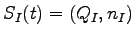 , and , and
![$ R_I(t)=(Q_I,\delta I,[N_I- n_I])$](img3.png) .
A number of combinations of .
A number of combinations of
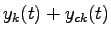 are possible satisfying the
above said constraints.
Similarly for diverging a number of possible outflows to different links is
possible satisfying corresponding constraints, hence this calls for an
optimization problem.
Ziliaskopoulos (2000), has given this LP formulations for both merging and
diverging, this has been discussed later are possible satisfying the
above said constraints.
Similarly for diverging a number of possible outflows to different links is
possible satisfying corresponding constraints, hence this calls for an
optimization problem.
Ziliaskopoulos (2000), has given this LP formulations for both merging and
diverging, this has been discussed later
|
|
| | |
|
|
|