| |
| | |
|
Consider a unidirectional continuous road section with two counting station.
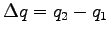
Let  : number of cars passing (1) in time : number of cars passing (1) in time  ; ;
 : the flow; : the flow;
 : number of cars passing (2) in time ; and : number of cars passing (2) in time ; and
 : the flow;
Assume : the flow;
Assume
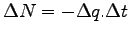
 , then queuing between (1) and (2) , then queuing between (1) and (2)
Note that  and therefore and therefore  is negative.
Therefore, is negative.
Therefore,
 |
(1) |
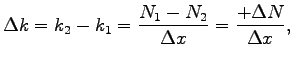
Similarly ( ), ),
Therefore
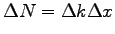
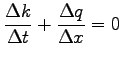
From the above two equations:
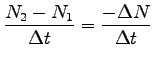
Dividing by

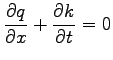
Assuming continuous medium (ie., taking limits)

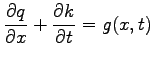
If sink or source is considered
where,  is the generation or dissipation term (Ramp on and off).
Solution to the above was proposed by Lighthill and Whitham (1955) and Richard
(1956) popularly knows as LWR Model. is the generation or dissipation term (Ramp on and off).
Solution to the above was proposed by Lighthill and Whitham (1955) and Richard
(1956) popularly knows as LWR Model.
|
|
| | |
|
|
|


![\includegraphics[height=5cm]{qfMacroConservationEqn}](img1.png)