The synthesis of chromophore of anthracycline antibiotic uses chiral osmium complex bearing chiral diamine L for asymmetric dihydroxylation with good enantioselectivity (Scheme 7). The resultant 1,2-diol could be subsequently converted into the desired chromophore of anthracycline antibiotic in good yield .
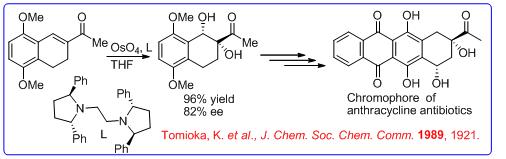
Scheme 7. Synthesis of Chromophore of Anthracycline Antibiotic
5.6.2 Asymmetric Aminohydroxylation
The chiral β-amino alcohol structural unit is a key motif in many biologically important molecules. It is difficult to imagine a more efficient means of creating this functionality than by the direct addition of the two heteroatom substituents to an alkene, especially if this transformation could be achieved in regioselective and enantioselective fashion. In parallel to allylic epoxidation and dihydroxylation of alkenes; Sharpless group has developed asymmetric aminohydroxylation of alkenes using osmium based catalysis.
Synthesis of chiral α -sulfonamido hydroxy compounds can be obtained when the alkene substrates are subjected to the aminohydroxylation reaction using chloramine-T (TsNClNa) as the nitrogen source and H2O as the oxygen source. The reaction is found to be successful in the presence of osmium complex bearing (DHQ)2 PHAL or (DHQD)2 PHAL. The α -sulfonamido hydroxy compounds can be isolated with high yield and enantiomeric purity. Better results are obtained with chloramine-T (oxidant) salts bearing smaller organic substituents on the sulfur. This reagent could be prepared separately and added to the reaction mixture as the stable anhydrous salt or it can be generated in situ (Scheme 8). The methyl (E )-cinnamate can be successfully converted into α-hydroxy- β-amino product with high enantioselectivity. The resultant product is used to construct the taxol side chain, and this process establishes the shortest and the most efficient route to the side chain of this pharmaceutically important agent.
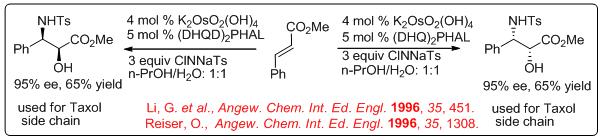
Scheme 8