However, a number of methods have been devised to stop the reaction at the aldehyde or ketone stage. Such protocols involve the formation of a masked carbonyl compound, which releases the desired compound on hydrolysis (Scheme 4).
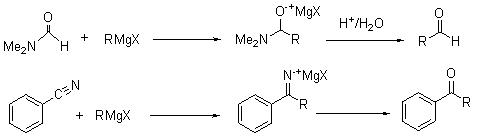 |
Scheme 4 |
In case of reaction of Grignard reaction with carbon dioxide, the reaction stops at the carboxylate (RCO2-) stage as it is resistant to further nucleophilic attack (Scheme 5)
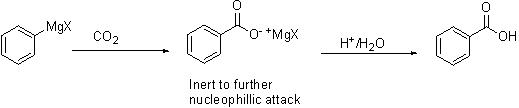 |
Scheme 5 |
Grignard reactions are prone to undergo side reactions. The reaction of a sterically hindered ketone with a Grignard reagent having a β-H shows a tendency towards reduction of the carbonyl group (Scheme 6).
 |
Scheme 6 |
3.1.1.2 Reactions with Epoxides
Epoxides react with organomagnesium halides to afford a primary alcohol with the lengthening of the carbon chain by two carbon atoms. However, in this case of substituted epoxides, the attack of the organomagnesium halide takes place from the less substituted ring carbon atom of the epoxides (Scheme 7).
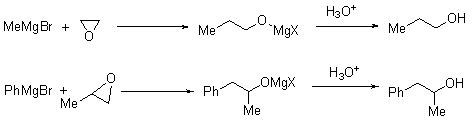 |
Scheme 7 |