Effect of pH on Photocatalytic Water Treatment.
- For uncharged organic pollutants, photocatalytic treatment is unfavorable under very acidic conditions, whereas very basic conditions appear to be favorable.
- At near-neutral pH values, the variations in degradation with pH are modest or nonexistent
- Because even at the extreme pH values the change in the photocatalytic degradation rate is generally less than one order of magnitude, the TiO2-photocatalyzed water treatment has, from this respect, an advantage over biological H2O2–Fe2+, H2O2–UV, O3–UV, and O3–H2O2 processes.
Competition Between Pollutants.
- Competition between several organic pollutants may affect the photocatalytic degradation rate of each species, depending on whether the process is limited by the irradiation or by the total organic matter.
- The factors intervening in the competition are the respective concentrations, the partition coefficients between the fluid phase and the adsorbed phase, and the relative reactivities with respect to the active species. Consequently, interference effects may or may not be observed.
Effect of Humic Acid on Photocatalytic Water Treatment.
In the case of water treatment, it has been shown recently that the inhibiting effect of humic acids at the concentrations found in natural waters is mainly due to UV absorption by these substances in competition with UV absorption by TiO2.
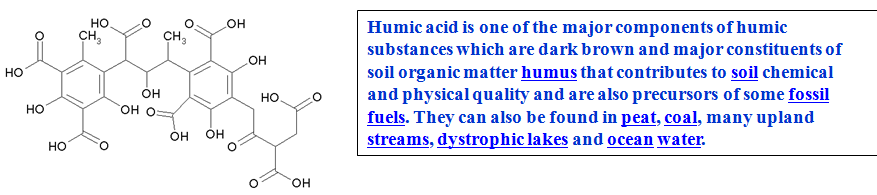
However, at low concentrations of humic acids, this negative effect can be more than counterbalanced by a positive effect tentatively attributed to the seizure of pollutant molecules in the microenvironment created in the vicinity of the TiO2 surface by the adsorbed humic acid.