- Biochemistry
- chemistry of biological systems
- relatively few classes of reactions mediated by enzymes
- Bio-organic Chemistry
- extension of organic chemistry toward biology
- e.g. synthesis of natural products
2.1.3. Some Basic Principles
- Chemoselectivity
- Biologically inherent (thiols)
- Exogenous via promiscuous systems (azido sugars, azidohomoalanine)
- Molecular Recognition
- Stereocomplementarity
- H-bonding
- Hydrophobic interactions
- Ultimately Everything Is Aqueous
- Probes, Diagnostics, and Drugs
- Tumor cell labeling
- Enzyme and metabolite tracking
- Catalysis
- Modern medicinal chemistry (inhibitor design) is essentially chemical biology
- Different Drugs
- Antibody therapeutics
- Interference RNAs
- 21st Century Medicine
- Proteomics, and Glycobiology, Small molecular approach.
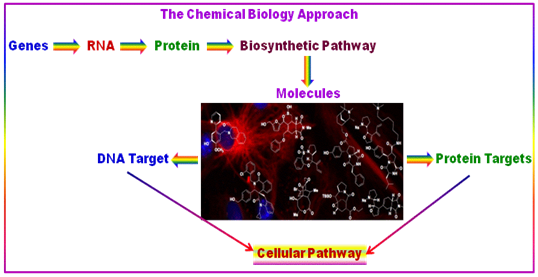
Figure 2.3: The approach of Chemical biology.
2.1.4. Proteomics and Glycobiology
Proteomics
- Proteomics investigates the proteome, the set of expressed proteins at a given time under defined conditions. Proteomics deals with rapid protein identification and has developed into a biological assay for quantitative analysis of complex protein samples by comparing protein changes in differently perturbed systems. Current goals in proteomics include determining protein sequences, abundance and any post-translational modifications. Other interests are study of protein-protein interactions, cellular distribution of proteins and understanding protein activity. Another important aspect of proteomics is the advancement of technology to achieve these goals.
- Within Chemical Biology-related Proteomics, both the structure and function of the proteins are of importance as a protein may have fundamentally different functions dependent on its three dimensional structure. An example of when this can give clinical effects is the Mad Cow Disease which is caused by a specific type of misfolded protein called a prion.
- Chemical biologists are poised to impact proteomics through the development of techniques, probes and assays with synthetic chemistry for the characterization of protein samples of high complexity. These approaches include the development of enrichment strategies, chemical affinity tags and probes.
Glycobiology
- Glycobiology is the study of the structure, biological functions, and biosynthesis, of saccharides presents in all living cells and are widely distributed in nature with the help of organic chemistry, molecular and cellular biology, enzymology and related domains.
- Sugars or saccharides are essential components of all living things and aspects of the various different roles they play in biology are researched in various different medical, biochemical and biotechnological fields.
- Sugars control and influence almost every aspect of the cellular processes ranging from cell-cell interactions, energy intermediates, adhesion mechanisms, growth factor signaling, blood clotting, receptor binding, regulating the activity of hormones in the blood, directing embryonic development, and serving structural roles. In this new light, the role of sugars is being reconsidered with a new zeal to understand the working of the intricate processes of life.
- Thus, glycobiology is an area of dense research for chemical biologists. For instance, live cells can be supplied with synthetic variants of natural sugars in order to probe the function of the sugars in vivo. Carolyn Bertozzi at University of California, Berkeley has developed a method for site-specifically reacting molecules the surface of cells that have been labeled with synthetic sugars.
- Glycomics, analogous to Genomics and Proteomics, is the systematic study of all glycan structures of a given cell type or organism and is a subset of glycobiology.
- While DNA, RNA and Proteins are encoded at the genetic level, sugars or glycans or glycoconjugates (Sugars linked with other types of biological molecule, like: Glycoproteins; Proteoglycans; and Glycolipids) in the cell are not encoded directly at any level.
- It is well established fact that simple sugars have their own complex language, perhaps more complex than those of proteins and DNA. The molecules continuously steer and guide many activities relevant to the proper functioning of a cell. In fact, many proteins undergo post-translational modifications to form conjugated molecules with sugar (Glycoconjugates) to function properly. However, research in this field is not growing at a fast space compared to those of other major macromolecules, mostly because of the structural complexity of the sugars. They are structurally so complex, can rival the size and complexity of DNA and proteins. Furthermore, their complexity goes on increasing as they come together to form a range of homo and hetero polymeric compounds inside the cell, controlling and influencing a wide array of functional mechanics.
- Fast Atom Bombardment (FAB) mass spectrometry is a powerful tool for characterizing the complex carbohydrates. This technique can be coupled with sensitive array detector technology to elucidate the structures of glycans.
- The Scope of Glycomics Research: Growing understanding, knowledge, and investigations reveal beyond doubt that the sugar molecules are not mere decorative elements serving simply structural and energy requirements in a cell. It is clear that their involvement in the intricate design of life is far more crucial than that understood a few years ago. Glycans are at the center of many disorders and diseases sparking the possibility of exploiting them for therapeutic and diagnostic purposes. There are many biochemical pathways and diseases in which glycans are intricately involved. There are many ways in which sugars may affect physiological conditions. What is yet unclear is how many of the possible structures can be predicted by permutation and combination which actually exist in nature. Thus, investigating the structure is a subject of great deal of research.