2.1. Introduction - Overview of Chemical Biology
2.1.1. What Is Chemical Biology?
- Although the The term “Chemical Biology originates in 1945 by Linus Pauling, it is a relatively new scientific area related to Molecular biology, Structural chemistry, Bioinformatics, Proteomics, Organic chemistry, Pharmacology, Medicinal chemistry and many others.
- The field is primarily concerned with research at the interface of Chemistry and Biology. But in practical sense it is largely focused on small molecules as research tools and potential therapeutics. The crucial part of the work in Chemical Biology is the design and synthesis of small molecules and screening of these with bioassays by utilizing instrumentation of chemistry and biology. It takes the helps of all established field in sciences and biosciences including efficient methods for the synthesis of large numbers of compounds, characterization tools, computational structure-activity relationship, and high-throughput screening in bioassays. Thus the chemical biology is important approach for combating disease such as Cancer, Neurodegenerative diseases, Inflammation and many others.
- Thus, Chemical Biology-related research is strongly interdisciplinary and contains elements from many scientific disciplines such as Medicinal chemistry, Molecular biology, Pharmacology, Biophysical chemistry, Biochemistry, Organic chemistry, Structural chemistry, Bioinformatics, Proteomics, Genetics and more (Figure 2.1 and 2.2).
- Chemical biology may also be defined as the application of synthetic chemical techniques and tools to the study and manipulation of biological systems.
- Chemical biology is a scientific discipline spanning the fields of chemistry and biology that involves the application of chemical techniques and tools, often compounds produced through synthetic chemistry, to the study and manipulation of biological systems.
- This is slightly different from biochemistry, which is classically defined as the study of the chemistry of biomolecules. While, biochemists study biomolecules, their three-dimensional structure, dynamics, functions and the inhibition/ activation of enzymes/receptors with small organic molecules, Chemical biologists attempt to utilize chemical principles to modulate systems to either investigate the underlying biology or create new function. Thus, Chemical Biology is often closer related to that of cell biology than biochemistry. In short, biochemists deal with the chemistry of biology, chemical biologists deal with chemistry applied to biology.
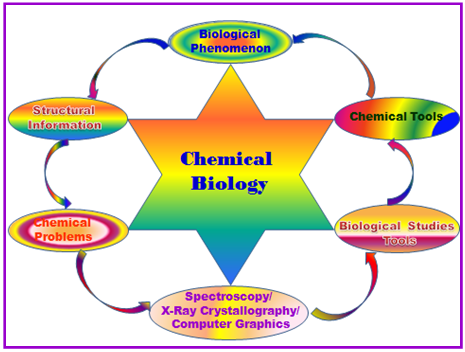
Figure 2.1: Chemical biology takes the help of various research tools from other branches of sciences.
- Some forms of chemical biology attempt to answer biological questions by directly probing living systems at the chemical level. In contrast to research using biochemistry, genetics, or molecular biology, where mutagenesis can provide a new version of the organism or cell of interest, chemical biology studies sometime probe systems in vitro and in vivo with small molecules that have been designed for a specific purpose or identified on the basis of biochemical or cell-based screening.
- According to Schreiber’s Definition: Chemical biologists make both small and large ‘small molecules’. They make them in tubes and cells, on the surfaces of glass, in monolayers, and even on phage viruses, and they use them to illuminate the principles that underlie life.
- To my understanding, Chemical Biology is the scientifically designed chemical-molecular approach to investigate cellular principles at molecular levels with the help of biochemical research tools.
- Systems of Interest of Chemical Biology:
Chemical Biology is driven by the fast expansion of scientific knowledge and methods that has occurred during the last decades in areas such as Molecular biology. Most importantly, recent mapping of the Human genome has made it possible to open up the field of Proteomics. However, the fast development in other areas including Bioinformatics and Structural biology has also had a great impact. In addition, the technical development in for instance imaging, high-throughput screening (HTS) and Synthetic chemistry has been important.
Research in Chemical Biology is made in many ways and includes studies in for instance:- Proteomics
- Glycobiology
- Combinatorial chemistry
- Molecular sensing
- siRNA-A tool in chemical biology
- small molecules as probes of biology and medicine
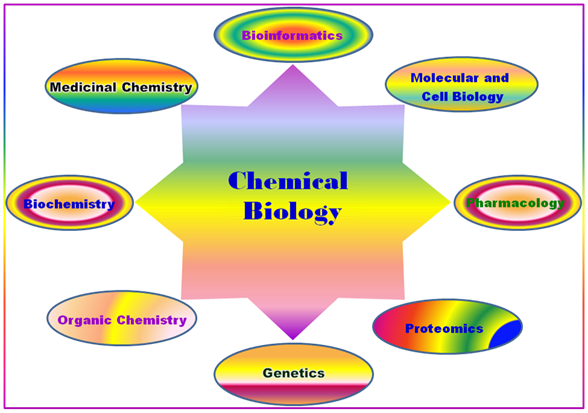
Figure 2.2: Relation between Chemical biology and other branches of sciences.