3.5.2 Olefins: Alkenes such as ethylene, propylene and butylenes are highly chemically reactive. They are not found in mentionable quantities in crude oil but are encountered in some refinery processes such as alkylation.
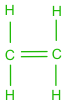
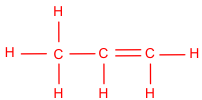
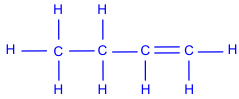
Ethylene(C2H4) Propylene(C3H6) Butylene(C4H8)
3.5.3 Naphthenes: Naphthenes or cycloalkanes such as cyclopropane, methyl cyclohexane are also present in the crude oil. These compounds are not aromatic and hence do not contribute much to the octane number. Therefore, in the reforming reaction, these compounds are targeted to generate aromatics which have higher octane numbers than the naphthenes.
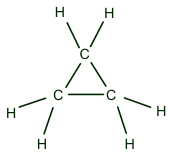
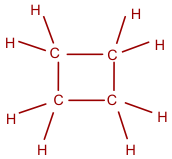
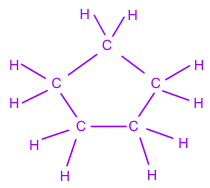
Cyclopropane(C3H6) Cyclobutane(C4H8) Cyclopentane(C5H10)
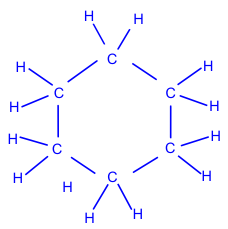
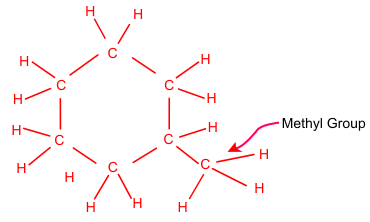
Cyclohexane(C6H12) Methyl Cyclohexane(C7H14)
3.5.4 Aromatics: Aromatics such as benzene, toluene o/m/p-xylene are also available in the crude oil. These contribute towards higher octane number products and the target is to maximize their quantity in a refinery process.
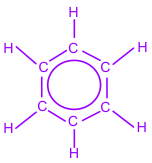
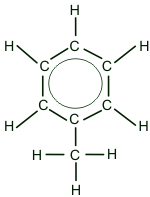
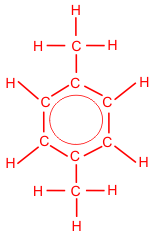
Benzene(C6H6) Tolune(C7H8) Para-X ylene(C8H10)
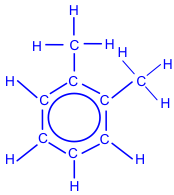
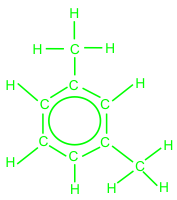
Ortho-Xylene(C8H10) Meta-X ylene(C8H10)
3.5.5 Napthalenes: Polynuclear aromatics such as naphthalenes consist of two or three or more aromatic rings. Their molecular weight is usually between 150 – 500.

Napthalenes
Organic sulphur compounds: Not all compounds in the crude are hydrocarbons consisting of hydrogen and carbon only. Organic sulphur compounds such as thiophene, pyridine also exist in the crude oil. The basic difficulty of these organic sulphur compounds is the additional hydrogen requirements in the hydrotreaters to meet the euro III standards. Therefore, the operating conditions of the hydrotreaters is significantly intense when compared to those that do not target the reduction in the concentration of these organic sulphur compounds. Therefore, ever growing environmental legislations indicate technology and process development/improvement on the processing of organic sulphur compounds.
3.5.6 Oxygen containing compounds: These compounds do not exist 2 % by weight in the crude oil. Typical examples are acetic and benzoic acids. These compounds cause corrosion and therefore needs to be effectively handled.
3.5.7 Resins: Resins are polynuclear aromatic structures supported with side chains of paraffins and small ring aromatics. Their molecular weights vary between 500 – 1500. These compounds also contain sulphur, nitrogen, oxygen, vanadium and nickel.
3.5.8 Asphaltenes: Asphaltenes are polynuclear aromatic structures consisting of 20 or more aromatic rings along with paraffinic and naphthenic chains. A crude with high quantities of resins and asphaltenes (heavy crude) is usually targeted for coke production.