3.4.6 Flash and fire point
Flash and fire point are important properties that are relevant to the safety and transmission of refinery products. Flash point is the temperature above which the product flashes forming a mixture capable of inducing ignition with air. Fire point is the temperature well above the flash point where the product could catch fire. These two important properties are always taken care in the day to day operation of a refinery.
3.4.7 Pour point
When a petroleum product is cooled, first a cloudy appearance of the product occurs at a certain temperature. This temperature is termed as the cloud point. Upon further cooling, the product will ceases to flow at a temperature. This temperature is termed as the pour point. Both pour and cloud points are important properties of the product streams as far as heavier products are concerned. For heavier products, they are specified in a desired range and this is achieved by blending appropriate amounts of lighter intermediate products.
3.4.8 Octane number
Though irrelevant to the crude oil stream, the octane number is an important property for many intermediate streams that undergo blending later on to produce automotive gasoline, diesel etc.Typically gasoline tends to knock the engines. The knocking tendency of the gasoline is defined in terms of the maximum compression ratio of the engine at which the knock occurs. Therefore, high quality gasoline will tend to knock at higher compression ratios and vice versa. However, for comparative purpose, still one needs to have a pure component whose compression ratio is known for knocking. Iso-octane is eventually considered as the barometer for octane number comparison. While iso-octane was given an octane number of 100, n-heptane is given a scale of 0. Therefore, the octane number of a fuel is equivalent to a mixture of a iso-octane and n-heptane that provides the same compression ratio in a fuel engine. Thus an octane number of 80 indicates that the fuel is equivalent to the performance characteristics in a fuel engine fed with 80 vol % of isooctane and 20 % of n-heptane.
Octane numbers are very relevant in the reforming, isomerisation and alkylation processes of the refining industry. These processes enable the successful reactive transformations to yield long side chain paraffins and aromatics that possess higher octane numbers than the feed constituents which do not consist of higher quantities of constituents possessing straight chain paraffins and non-aromatics (naphthenes).
3.5 Crude chemistry
Fundamentally, crude oil consists of 84 – 87 wt % carbon, 11 – 14 % hydrogen, 0 – 3 wt % sulphur, 0 – 2 wt % oxygen, 0 – 0.6 wt % nitrogen and metals ranging from 0 – 100 ppm. Understanding thoroughly the fundamentals of crude chemistry is very important in various refining processes. The existence of compounds with various functional groups and their dominance or reduction in various refinery products is what is essentially targeted in various chemical and physical processes in the refinery.
Based on chemical analysis and existence of various functional groups, refinery crude can be broadly categorized into about 9 categories summarized as
3.5.1 Paraffins: Paraffins refer to alkanes such as methane, ethane, propane, n and iso butane, n and iso pentane. These compounds are primarily obtained as a gas fraction from the crude distillation unit.

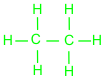
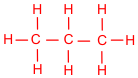
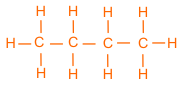
Methane(CH4) Ethane(C2H6) Propene(C3H8) Normal Butane(nC4H10)
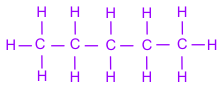
Normal Pentene (C5H12)