2. Bactofection- This mode of gene transfer is very popular in plant where agrobacterium tumefaciens is used. In animal cell, bacteria is actively been taken up by the host cell through phagocytosis and entrapped in a membraneous vesicle known as phagosome. Then bacteria get escape from phagosome and get lysed to release the DNA into the cytosol. In alternate mechanism, bacteria get lysed inside the phagosome and DNA is released into the cytosol. The bacterial species used in this methods are salmonella, shigella etc. Most of the strain used to deliver the DNA are attenuated so that they should not harm host cell ( Figure 21. 4).
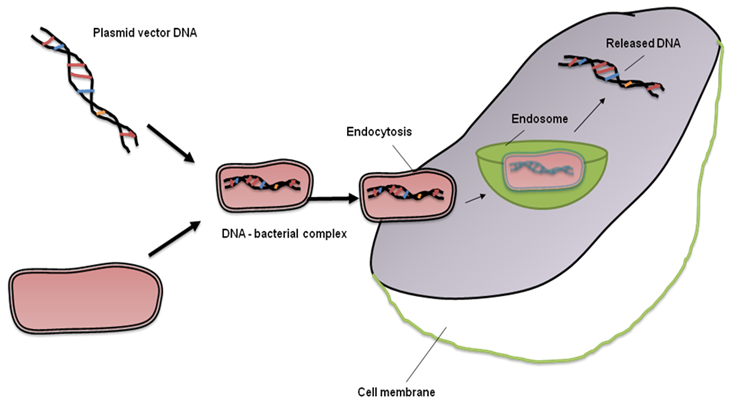
Figure 21.4: Proposed mechanism of transfection of mammalian cell with bacteria.
3. Transduction (Virus mediated)- Viral particle has a natural tendency to attack and deliver the DNA into the eukaryotic cells. As discussed previously, cloning gene of interest in to the viral vectors is a innovative way to deliver the DNA into the host cell. If the recombination sequences are available, the delivered DNA is integrated into the host and replicate. Virus has essential components for expression of proteins required for DNA replication, RNA polymerase and other ligand for attachment onto the host cell. In addition, it has additional structural components to regulate infection cycle. The virus vector contains cassettes to perform all these functions then it is fully sufficient to propagate independently. Few virus strains may cause disease if their propagation will be uncontrolled. A mechanism has been devised to keep a check on the uncontrolled propagation of virus in cell. Few crucial structural blocks are placed on another helper plasmid, in this case virus propagate only if helper plasmid has been supplied along with the viral vector. This particular arrangement is made with the virus strains which can cause disease after integrating into the genome such as lentivirus.