| Initial bioanalytical methods were not highly specific and were relatively insensitive as compared to the modern methods. The assays included colorimetric estimation of the compounds or simple bioassays, such as antibiotic estimation by quantifying their ability to inhibit microbial growth. Development of | |
| pharmacokinetics during 1930s started demanding for more specific and sensitive methods to accurately determine the concentrations of drugs and metabolites in biological specimens. Around this time, | 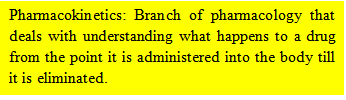 |
spectroscopic techniques such as UV/Visible spectroscopy, infrared spectroscopy, and chiroptical spectroscopy were seeing advancement but were largely restricted to the analysis of chemical compounds. Lack of sensitive instrumentation around that time further restricted their applications to biological samples that usually have low concentrations of molecules. Second half of the 20th century saw a rapid development in the instrumentation and development of new methodologies that eventually would find applications in life sciences and medicine. Liquid chromatography turned out to be a major advancement towards achieving sensitivity and power of resolving the closely-related metabolites. Reversed-phase chromatography, for example, has proved to be an excellent tool for resolving and analyzing the small molecules with excellent sensitivity. Electrophoresis is another powerful tool for analyzing and separating biomolecules. It has turned out to be an indispensable tool for analyzing nucleic acids. Integrity of isolated nucleic acids, cleavage of DNA molecules by restriction enzymes, mapping of restriction sites in a DNA molecule, and joining of two or more DNA fragments by ligases are some of the diverse applications of electrophoresis in a molecular genetics laboratory (Figure 2.1). DNA molecules differing in even one base pair can be separated by electrophoresis; this allows sequencing of DNA by Sanger's method. Electrophoresis is also used to analyze proteins. Electrophoresis allows separation of proteins based on their isoelectric points. SDS-PAGE (Sodium dodecyl – polyacrylamide gel electrophoresis) of proteins separates the proteins based on their size and therefore allows determination of their molecular weights (discussed in lecture 32). |
|