1. Preparation and handling
The simplest method of preparing media is to use commercially available, dry, powdered media containing mineral elements and growth regulators. By following the procedure written on the packets, dissolve the powder in distilled or demineralized water (10% less than the final volume of the medium). After adding sugar and other desired supplements like, plant growth regulators, make up the final volume with distilled water, adjust the pH, add agar and then autoclave the medium.
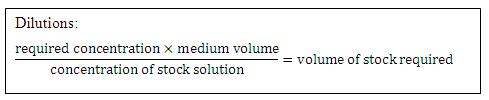
An alternative method of media preparation is to prepare a series of concentrated stock solutions which can be combined later as required. For preparing stock solutions and media, use glass-distilled or demineralized water and chemicals of high purity, analytical reagent (AR) grade.
1.1. Composition of widely used tissue culture media
Both the media listed in the below tables 2 & 3 can be prepared from stock solutions of:
i. Macronutrients: As its name suggests, in plant tissue culture media these components provide the elements which are required in large amounts (concentrations greater than 0.5 mmole l-1 ) by cultured plant cells. Macronutrients are usually considered to be carbon, nitrogen, phosphorous, magnesium, potassium, calcium and sulphur.
ii. Micronutrients: It provides the elements that are required in trace amounts (concentrations less than 0.5 mmole l-1 ) for plant growth and development. These include, manganese, copper, cobalt, boron, iron, molybdenum, zinc and iodine.
iii. Iron source: It is considered the most important constituent and required for the formation of several chlorophyll precursors and is a component of ferredoxins (proteins containing iron) which are important oxidation : reduction reagents.
iv. Organic supplements (vitamins): Like animals, in plants too vitamins provide nutrition for healthy growth and development. Although plants synthesize many vitamins under natural conditions and, therefore, under in vitro conditions they are supplied from outside to maintain biosynthetic capacity of plant cells in vitro. There are no firm rules as to what vitamins are essential for plant tissues and cell cultures. The only two vitamins that are considered to be essential are myo-inositol and thiamine. Myo-inositol is considered to be vitamin B and has many diverse roles in cellular metabolism and physiology. It is also involved in the biosynthesis of vitamin C.
v. Carbon source: This is supplied in the form of carbohydrate. Plant cells and tissues in the culture medium are heterotrophic and are dependent on external source of carbon. Sucrose is the preferred carbon source as it is economical, readily available, relatively stable to autoclaving and readily assimilated by plant cells. During sterilization (by autoclaving) of medium, sucrose gets hydrolyzed to glucose and fructose. Plant cells in culture first utilize glucose and then fructose. Besides sucrose, other carbohydrates such as, lactose, maltose, galactose are also used in culture media but with a very limited success.