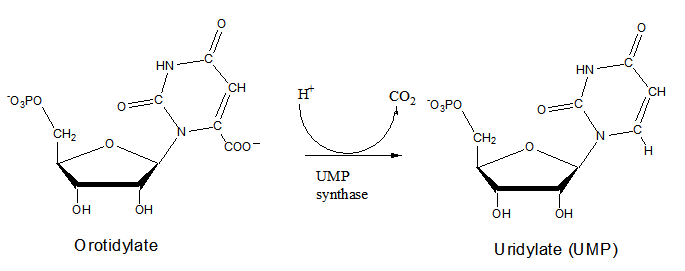
Part 2. The formation of orotate
The committed step in the biosynthesis of pyrimidines is the formation of N-carbamoyl- aspartate from aspartate and carbamoyl phosphate. Carbamoyl aspartate is then cyclized and oxidized by NAD+ to orotate:
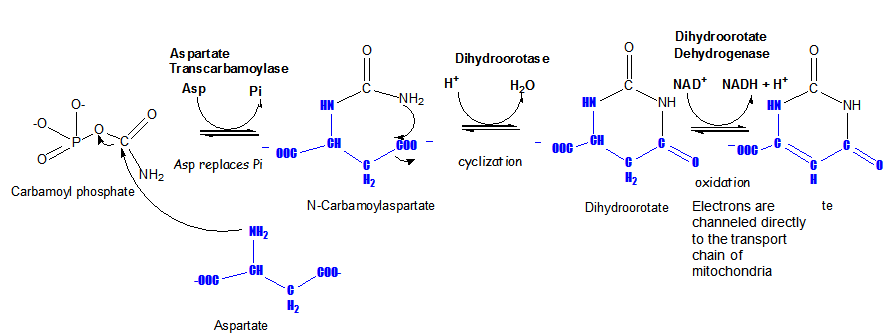
Fig. 29 . Formation of Orotate (Stryer's Biochemistry 5th ed )
Note:
1. Aspartate transcarbamoylase is allosterically inhibited by CTP, the final product of pyrimidine nucleotide biosynthesis. This ensures a tight control of CTP concentrations in a cell.
- • N-(phosphonacetyl)-L-aspartate (PALA) is a bisubstrate analog inhibitor of aspartate transcarbamoylase. It resembles carbamoylphosphate+ aspartate
• Human carbamoyl phosphate synthetase and aspartate transcarbamoylase are part of the same protein.
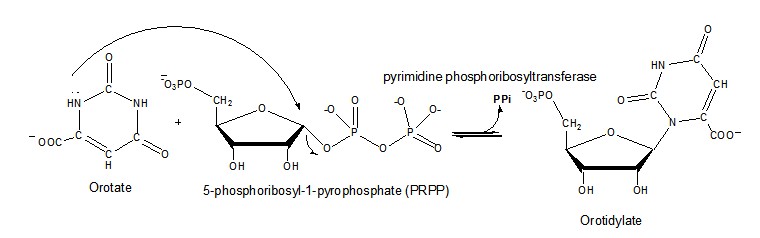
Part 3 : Formation of UMP. Orotate coupling to ribose in the form of 5-phosphoribosyl-1-pyrophosphate (PRPP) produces orotidylate (OMP):
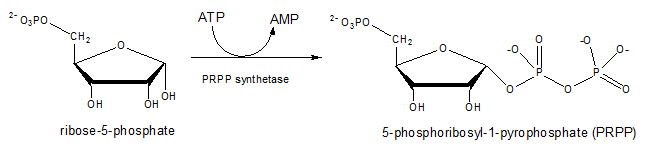
PRPP is produced by phosphorylation of ribose-5-phosphate (from pentose phosphate pathway):
 Decarboxylation of orotidylate yields uridylate (UMP), a major pyrimidine nucleotide.