1. Introduction
Nucleotides are essential for many cellular functions, including the storage of genetic information, gene expression, energy metabolism, cell signaling, and biosynthesis. In a cell, nucleotides exist primarily as 5'-triphosphates. ATP is the most prevalent nucleotide, reaching mM concentrations in many cell types, while other nucleotides may be present at much lower concentrations (cAMP).
Biological significance of nucleotides
- 1. Building blocks of nucleic acids (DNA and RNA).
2. Involved in energy storage, muscle contraction, active transport, and maintenance of ion gradients.
3. Activated intermediates in biosynthesis (e.g. UD P-glucose, S-adenosylmethionine (SAM).
4. Components of coenzymes (NAD+ , NADP+ , FAD, FMN, and CoA)
5. Metabolic regulators:
a. Second messengers (cAMP, cGMP)
b. Phosphate (PO32- ) donors for phosphorylation of kinases and phosphatases in signal transduction (ATP)
c. Regulation of some enzymes via adenylation and uridylylation
Each nucleotide contains a purine or pyrimidine base, a ribose or deoxyribose sugar, and a phosphate:
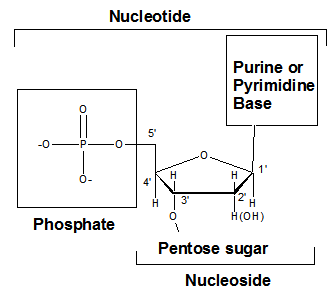
Fig. 25. strcuture of nucleotide
Sources of nucleotides in a cell:
1. Degradation of nucleic acids (salvage pathways). Free purine bases can be recycled by coupling with the ribose phosphate moiety, 5-phospho-ribosyl-1-pyrophosphate (PRPP), to form nucleotide monophosphates:
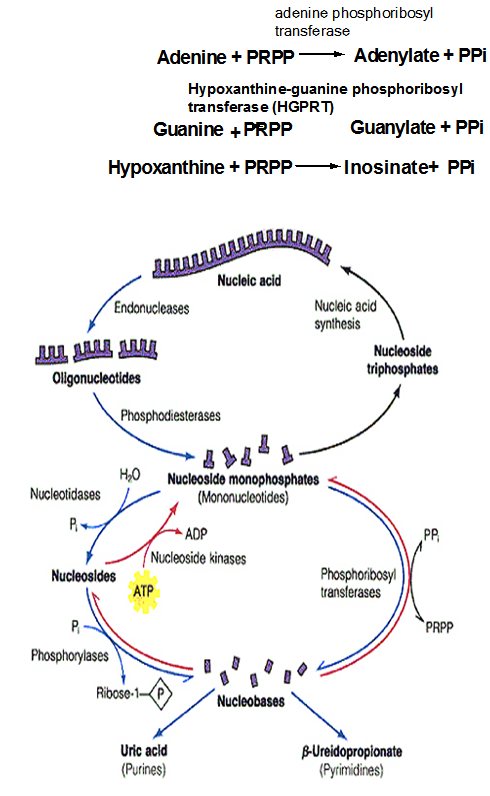
Fig. 26 . Soruces of nucleotides (Benjamin cummings, 2008)