De novo synthesis of pyrimidines
Metabolic precursors of nucleotides include amino acids, CO2 , and ribose-5-phosphate.
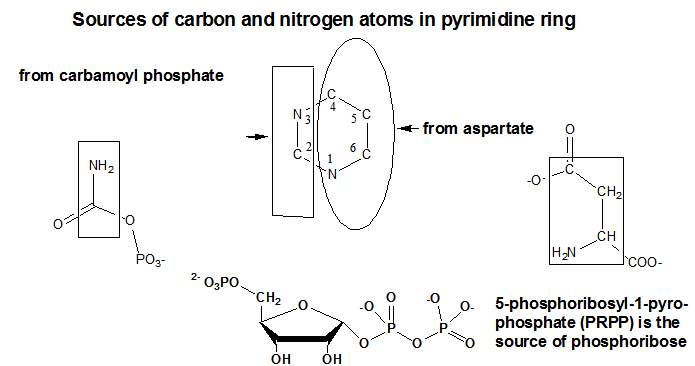
Fig. 27. Soruces of carbon and nitrogen atoms in pyrimidine ring (Stryer's Biochemistry 4th edition)
The pyrimidine ring is synthesized in a 6-step process that requires participation of several enzymes. Most required enzymes are cytosolic, with the exception of orotate dehydrogenase that is localized in mitochondria (see below). The general strategy is to use pre-assembled components (carbamoyl phosphate and aspartate) to make a pyrimidine ring which is then attached to the phosphoribose.
Part 1. The formation of carbamoyl phosphate is catalyzed by cytosolic carbamoyl phosphate synthetase II (CPS).
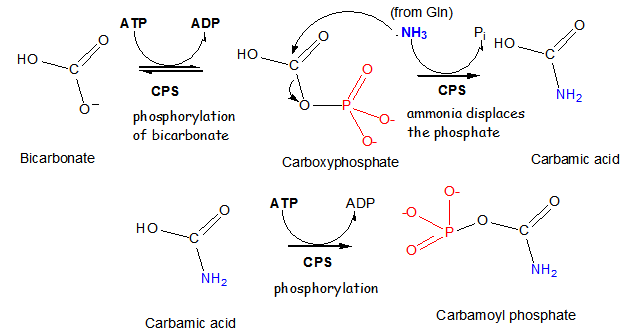
Fig. 28 . The formation of carbamoyl phosphate
Regulated Step in Pyrimidine Biosynthesis
General Mechanism for replacing carbonyl oxygen with amino group:
The ammonia necessary for the formation of carbamic acid originates from glutamine:
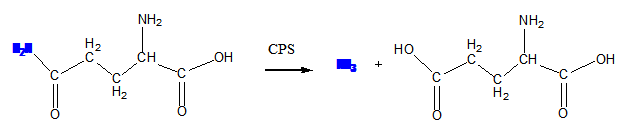
Note that a single enzyme, carbamoyl phosphate synthetase II, catalyzes all 4 reactions required for the synthesis of carbamoyl phosphate. Reaction intermediates are channeled internally between the active sites responsible for phosphorylation, carbamic acid formation, and glutamine hydrolysis, without dissociating from the enzyme. This is necessary to protect unstable intermediates from hydrolysis and to drive the reactions forward.