Fermentation:
Fermentation is the process of extracting energy from the oxidation of organic compounds, such as carbohydrates, using an endogenous electron acceptor, which is usually an organic compound. In contrast, respiration is where electrons are donated to an exogenous electron acceptor, such as oxygen, via an electron transport chain. Fermentation is important in anaerobic conditions when there is no oxidative phosphorylation to maintain the production of ATP (adenosine triphosphate) by glycolysis.
During fermentation, pyruvate is metabolised to various compounds. Homolactic fermentation is the production of lactic acid from pyruvate; alcoholic fermentation is the conversion of pyruvate into ethanol and carbon dioxide; and heterolactic fermentation is the production of lactic acid as well as other acids and alcohols.
Fermentation does not necessarily have to be carried out in an anaerobic environment. For example, even in the presence of abundant oxygen, yeast cells greatly prefer fermentation to oxidative phosphorylation, as long as sugars are readily available for consumption (a phenomenon known as the Crabtree effect).
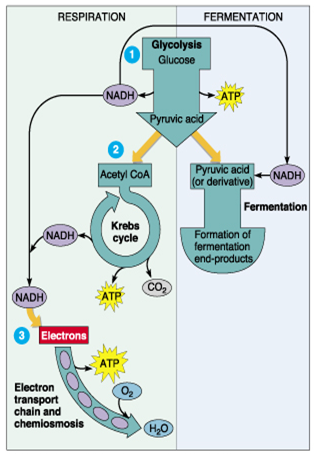
Fig. 9. Respiration and Fermentation pathways
Lactic acid fermentation is the simplest type of fermentation. In essence, it is a redox reaction. In anaerobic conditions, the cell's primary mechanism of ATP production is glycolysis. Glycolysis reduces – transfers electrons to – NAD+, forming NADH. However there is a limited supply of NAD+ available in any given cell.
- • For glycolysis to continue, NADH must be oxidized – have electrons taken away – to regenerate the NAD+ that is used in glycolysis. In an aerobic environment (Oxygen is available), reduction of NADH is usually done through an electron transport chain in a process called oxidative phosphorylation; however, oxidative phosphorylation cannot occur in anaerobic environments (Oxygen is not available) due to the pathways dependence on the terminal electron acceptor of oxygen.
• Instead, the NADH donates its extra electrons to the pyruvate molecules formed during glycolysis. Since the NADH has lost electrons, NAD+ regenerates and is again available for glycolysis. Lactic acid, for which this process is named, is formed by the reduction of pyruvate.
In heterolactic acid fermentation, one molecule of pyruvate is converted to lactate; the other is converted to ethanol and carbon dioxide.