Anaerobic Respiration
Respiration in some prokaryotes is possible using electron acceptors other than oxygen (O2). This type of respiration in the absence of oxygen is referred to as anaerobic respiration. Electron acceptors used by prokaryotes for respiration or methanogenesis (an analogous type of energy generation in archaea bacteria) are described in the table below.
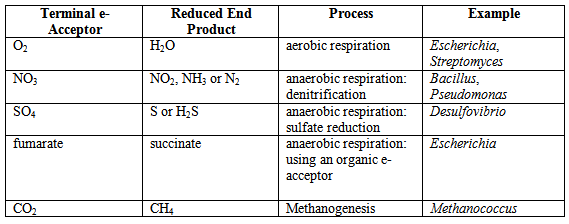
Biological methanogenesis is the source of methane (natural gas) on the planet. Methane is preserved as a fossil fuel (until we use it all up) because it is produced and stored under anaerobic conditions, and oxygen is needed to oxidize the CH4 molecule.
Methanogenesis is not really a form of anaerobic respiration, but it is a type of energy-generating metabolism that requires an outside electron acceptor in the form of CO2.
Sulfate reduction is not an alternative to the use of O2 as an electron acceptor. It is an obligatory process that occurs only under anaerobic conditions. Methanogens and sulfate reducers may share habitat, especially in the anaerobic sediments of eutrophic lakes such as Lake Mendota, where they crank out methane and hydrogen sulfide at a surprising rate.
Nitrate reduction
Some microbes are capable of using nitrate as their terminal electron accepter. The ETS used is somewhat similar to aerobic respiration, but the terminal electron transport protein donates its electrons to nitrate instead of oxygen. Nitrate reduction in some species (the best studied being E. coli) is a two electron transfer where nitrate is reduced to nitrite. Electrons flow through the quinone pool and the cytochrome b/c1 complex and then nitrate reductase resulting in the transport of protons across the membrane as discussed earlier for aerobic respiration.
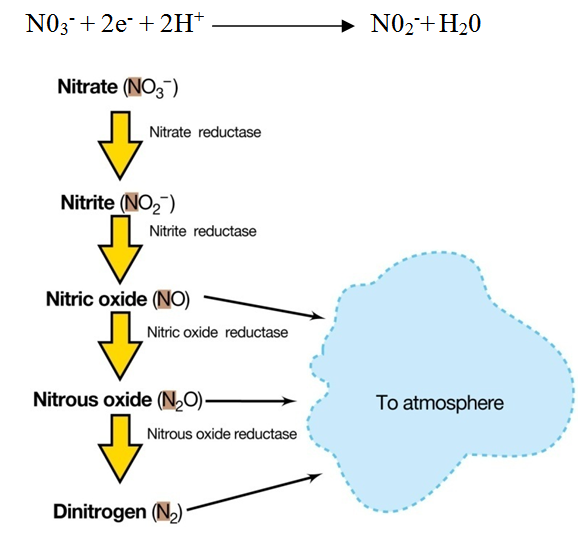
Fig. 7. Nitrate reduction