Steps in the dissimilative reduction of nitrate . Some organisms, for example Escherichia coli , can carry out only the first step. All enzymes involved are derepressed by anoxic conditions. Also, some prokaryotes are known that can reduce NO3- to NH4+ in dissimilative metabolism.
Denitrification
Denitrification is an important process in agriculture because it removes NO3 from the soil. NO3 is a major source of nitrogen fertilizer in agriculture. Almost one-third the cost of some types of agriculture is in nitrate fertilizers. The use of nitrate as a respiratory electron acceptor is usually an alternative to the use of oxygen. Therefore, soil bacteria such as Pseudomonas and Bacillus will use O2 as an electron acceptor if it is available, and disregard NO3. This is the rationale in maintaining well-aerated soils by the agricultural practices of plowing and tilling. E. coli will utilize NO3 (as well as fumarate) as a respiratory electron acceptor and so it may be able to continue to respire in the anaerobic intestinal habitat.
Nitrite, the product of nitrate reduction, is still a highly oxidized molecule and can accept up to six more electrons before being fully reduced to nitrogen gas. Microbes exist (Paracoccus species, Pseudomonas stutzeri, Pseudomonas aeruginosa , and Rhodobacter sphaeroides are a few examples) that are able to reduce nitrate all the way to nitrogen gas. The process is carefully regulated by the microbe since some of the products of the reduction of nitrate to nitrogen gas are toxic to metabolism. This may explain the large number of genes involved in the process and the limited number of bacteria that are capable of denitrification. Below is the chemical equation for the reduction of nitrate to N2.

Denitrification takes eight electrons from metabolism and adds them to nitrate to form N2
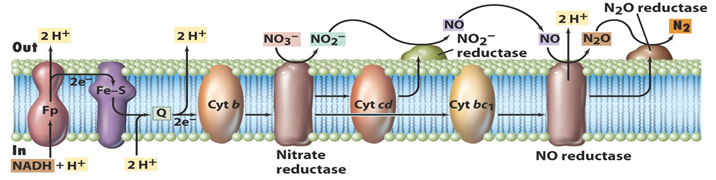
Fig. 8. Denitification by Pseudomonas stutzeri
• Four terminal reductases involved in denitrification steps;
- Nar : Nitrate reductase (Mo-containing enzyme)
- Nir : Nitrite reductase
- Nor : Nitric oxide reductase
- N2 Or : Nitrous oxide reductase
• All can function independently but they operate in unison