Insertional inactivation of antibiotic gene can also be used for the selection of recombinant cells.
• A vector is chosen where restriction sites are available for cloning within the antibiotic gene. Insertion of a foreign gene in the restriction site will lead to the loss of activity of the selectable marker (antibiotic) gene. For example-pBR322 have several restriction sites. BamH1 cuts at a one position within genes that code for tetracycline resistance. Thus recombinant pBR322 carrying foreign DNA at BamH1 site will not confer resistance to tetracycline, but are still resistant to ampicillin, which remains elsewhere.
• These recombinant cells are selected by replica plating method. The transformed cells are first plated on ampicillin containing medium and after the selection of transformed from non-transformed; the colonies are replica plated on medium containing tetracycline for screening of recombinant clones. After incubation, the viable colonies carrying pBR322 without DNA insert will appear and the positions in plate where the non-viable recombinant clones are present can be easily identified. Using the original master plate, these recombinant clones are picked up and subcultured using the same procedure to obtain a pure recombinant clone.
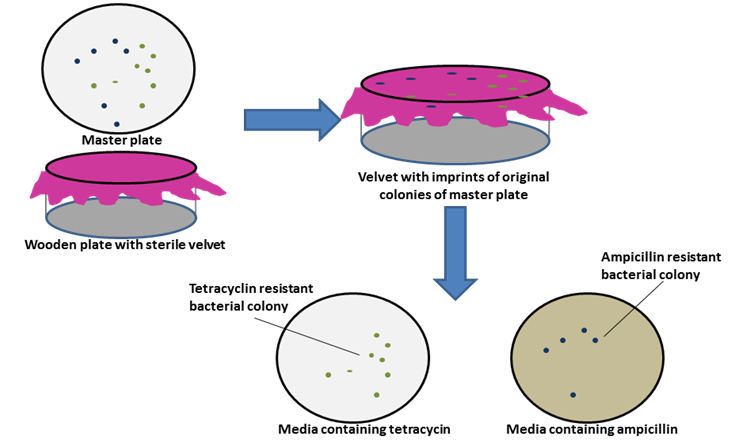
Fig 1-2.2.8.1 : Selection through recombinant bacteria by replica plating