1-2.2.5 Creation of recombinant DNA by ligation
- The vector DNA, foreign DNA and DNA ligase enzyme are added together at appropriate concentrations which results in the covalent linkage between the ends of DNA fragments.
- DNA ligase recognizes the ends of linear DNA molecules and gives a complex mixture of DNA molecules with randomly joined ends .
- The resulting recombinant DNA vector is then introduced into the host organism.
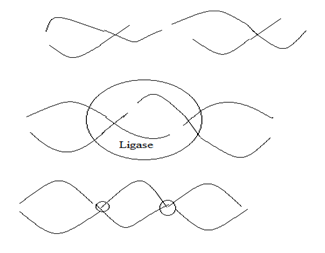
Fig 1-2.2.5 : Ligation using ligase enzyme
- In addition to desired recombinant DNA, complex mixture containing self ligated vector DNA, foreign DNA linked with other sequences and several other combinations of vector and foreign DNA also appear in the reaction mixture.
- Sorting of the complex mixture is done by agarose gel electrophoresis based on size of the recombinant vector.
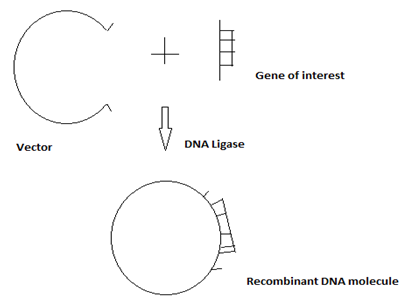
Fig 1-2.2.5.1 : Preparation of recombinant DNA
1-2.2.6 Introduction of recombinant DNA into host organism:
- For the propagation of a cloned gene, the recombinant DNA molecules have to be introduced into a host.
- Numerous methods of gene transfer are available to meet the diverse requirement and compatibility with the host (e.g. transformation, transduction, transfection, electroporation etc.).
- Transformation is the process in which microorganisms are able to take up the DNA from their surrounding via plasma membrane and express it. Cells should be competent to take up the foreign DNA.
- DNA transfer into mammalian cells cultured in vitro using non-viral vectors is termed as transfection.
- Transduction is the process of transfer of DNA molecule using viruses.
- Both transformation and transfection requires preparation of the cells through a specific growth condition and chemical treatment process that varies with the specific species and cell types to be used. For example – Calcium chloride is used for preparation of competent E.coli cells.
- Electroporation uses electrical pulses to create transient holes in the cell membrane through which DNA is translocated across the cell membrane. Cell wall has to be previously removed in plants to increase the rate of transfer. Electroporation is usually done by two methods:
- High voltage for short time,
- Low voltage for long time.
- Electroporation and transduction are very efficient methods to transfer DNA into cells.