3. Endocrine model:
In endocrine signaling , the signaling molecules are synthesized and secreted by endocrine cells, transported through the circulatory system or the tissue fluid of the organism and finally act on target cells distant from their site of synthesis as shown in Figure 3. Endocrine signals are called hormones. The target cells have receptors for binding specific hormones and thereby "pull" the appropriate hormones from the extracellular fluid. Endocrine hormones, for example, insulin and epinephrine, are synthesized and released in the bloodstream by specialized ductless endocrine glands.
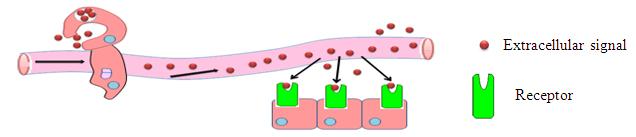
Figure 3: Endocrine signaling : Signaling molecules are synthesized and secreted by endocrine cells, transported through the circulatory system or the tissue fluid of the organism and finally act on target cells distant from their site of synthesis
Hormone: The term hormone is derived from the Greek word ‘horman' which means ‘to excite' or ‘to activate'. Hormones are chemical signalling molecules in animals. Endocrine system consists of specialized glands known as endocrine glands which on stimulation secrete powerful chemicals called hormones into the blood stream. The hormones have specific target cells located somewhere else in the body. A hormone is a chemical messenger which is released by one or more cells that affects cells in other parts of the organism. It is essentially a chemical that transports a signal from one cell to another. Most hormones initiate a cellular response by initially combining with either a specific intracellular or cell membrane associated receptor protein. A cell may have several different receptors that recognize the same hormone and activate different signal transduction pathways, or alternatively different hormones and their receptors may invoke the same biochemical pathway. For example, insulin is a hormone that is made by the beta cells in the pancreas. When it's released into the blood, insulin helps regulate how the cells of the body use glucose for energy.
Biochemical nature of hormones: Hormones may belong to different biochemical nature. Accordingly, they are classified as:
- Peptide hormone
- Steroid hormone
- Monoamines
1. Peptide hormone: Peptide hormone is a class of peptides which have endocrine functions and is secreted into the blood stream. Peptide hormones are synthesized in cells from amino acids. Numerous significant peptide hormones are secreted from the pituitary gland. Examples of peptide hormones are adrenocorticotrophic hormone (ACTH), growth hormone etc. ACTH is secreted by the anterior pituitary and acts on the adrenal cortex to regulate the secretion of glucocorticoids while growth hormone acts on bone, muscle and the liver.