In this lecture we will study about the various cell signalling models and in the later part about hormones which mediate cell signalling.
Cell Signaling: Secreted molecules mediate via three forms of signaling namely Paracrine, Autocrine, and Endocrine. S ignaling molecules that a cell secretes may be carried far afield to act on distant targets, or they may act as local mediators, affecting only cells in the immediate environment of the signaling cell.
- Autocrine signaling
- Paracrine signaling
- Endocrine signaling
1. Autocrine signaling:
In the autocrine signaling , cells respond to substances which they themselves release (as shown in Figure 1(a) and thus changes takes place in the cell itself. A cell secretes a hormone or chemical messenger that stimulates its own growth and proliferation. An example of an autocrine agent is the cytokine interleukin-1 in monocytes. It is produced in response to external stimuli and binds to cell-surface receptors on the same cell that produced it. Autocrine signaling is a characteristic feature of tumor cells, many of which overproduce and release growth factors that stimulate inappropriate, unregulated self-proliferation as well as influencing adjacent non-tumor cells; this process may lead to formation of a tumor mass. In autocrine signaling, a group of identical cells produces a higher concentration of a secreted signal than does a single cell as shown in Figure 1 (b).
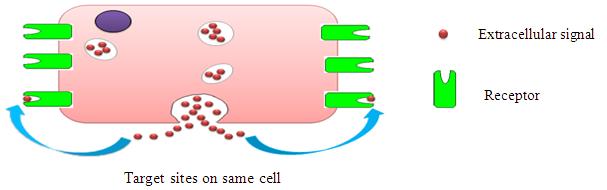
Figure 1 (a): Autocrine signaling: Cells responding to substances which they themselves release.