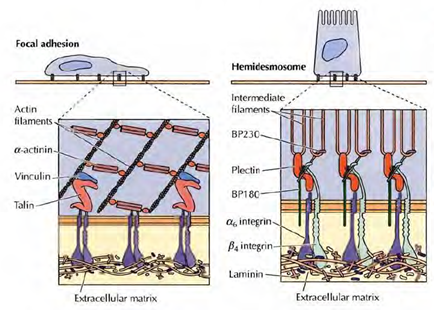
Figure 5: Cell-matrix junctions mediated by integrins. Integrins mediate two types of stable junctions the focal adhesions where bundles of actin filaments are anchored to integrins through associations with a number of other proteins, including α-actinin, talin, and vinculin. In hemidesmosomes, integrin links the basal lamina to intermediate filaments via plectin and BP230. BP180 functions in hemidesmosome assembly and stability. This figure has been printed with permission from The figure has been adapted from “The Cell, A Molecular Approach” by Geoffrey M. Cooper, 4th Ed. 2007.
Cell-matrix interaction is a step wise process and occurs through recruitment of specific junctional molecules. Focal adhesions develop from a small cluster of integrins, termed focal complexes, by the sequential recruitment of talin, vinculin, and α-actinin. This follows recruitment of formin, which initiates actin bundle formation. Myosin II then comes leads the development of tension at the point of adhesion resulting in cell signaling.
Cell to cell integration
Direct interactions between cells, as well as between cells and the extracellular matrix, are critical to the development and function of multicellular organisms. Some cell-cell interactions are transient, such as the interactions between cells of the immune system and the interactions that direct white blood cells to sites of tissue inflammation. In other cases, stable cell-cell junctions play a key role in the organization of cells in tissues. For example, several different types of stable cell-cell junctions are critical to the maintenance and function of epithelial cell sheets. Plant cells also associate with their neighbors not only by interactions between their cell walls, but also by specialized junctions between their plasma membranes called plasmodesmata.