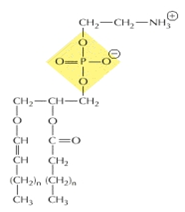
Figure 2: The structure of plasmalogen. The figure has been printed with permission from Molecular Biology of the Cell. 4th edition. Alberts B, Johnson A, Lewis J, et al. New York: Garland Science; 2002.
Peroxisome and diseases:
In most eukaryotic cells, the peroxisome is the principal organelle in which fatty acids are oxidized, thereby generating precursors for important biosynthetic pathways. In the human genetic disease X-linked adrenoleukodystrophy (ADL), peroxisomal oxidation of very long chain fatty acids is defective. The ADLgene encodes the peroxisomal membrane protein that transports into peroxisomes an enzyme required for the oxidation of these fatty acids. Persons with the severe form of ADL are unaffected until midchildhood, when severe neurological disorders appear, followed by death within a few years.
Zellweger syndrome is an inherited human disease, in which a defect in importing proteins into peroxisomes leads to a severe peroxisomal deficiency. These individuals, whose cells contain “empty” peroxisomes, have severe abnormalities in their brain, liver, and kidneys, and they die soon after birth. One form of this disease has been shown to be due to a mutation in the gene encoding a peroxisomal integral membrane protein, the peroxin Pex2, involved in protein import. A milder inherited peroxisomal disease is caused by a defective receptor for the N-terminal import signal.
Plastids:
Plant cells are readily distinguished from animal cells by the presence of two types of membrane-bounded compartments– vacuoles and plastids.
Types of plastids:
The term ‘plastid’ is derived from the Greek word “plastikas” (formed or moulded) and was
used by A.F.W. Schimper in 1885. Schimper classified the plastids into following types according to their structure, pigments and the functions:
1. Leucoplasts
The leucoplasts (leuco = white; plast = living) are the colourless plastids which are found
in embryonic and germ cells. They are also found in meristematic cells and in those regions of the plant which do not receive light. Plastids located in the cotyledons and the primordium of the stem are colourless (leucoplastes) but eventually become filled with chlorophyll and transform into chloroplasts. True leucoplasts occur in fully differentiated cells such as epidermal and internal plant tissues. True leucoplasts do not contain thylakoids and even ribosomes. They store the food materials as carbohydrates, lipids and proteins and accordingly are of following types:
(i) Amyloplasts. The amyloplasts (amyl=starch; plast=living) are those leucoplasts which synthesize and store the starch. The amyloplasts occur in those cells which store the starch. The outer membrane of the amyloplst encloses the stroma and contains one to eight starch granules. Starch granules of amyloplasts are typically composed of concentric layers of starch.
(ii) Elaioplasts. The elaioplasts store the lipids (oils) and occur in seeds of monocotyledons and
dicotyledons. They also include sterol-rich sterinochloroplast.
(iii) Proteinoplasts. The proteinoplasts are the protein storing plastids which mostly occur in
seeds and contain few thylakoids.
2. Chromoplasts
The chromoplasts (chroma=colour; plast=living) are the coloured plastids containing
carotenoids and other pigments. They impart colour (yellow, orange and red) to certain portions of plants such as flower petals (daffodils, rose), fruits (tomatoes) and some roots (carrots). Chromoplast structure is quite diverse; they may be round, ellipsoidal, or even needle-shaped, and the carotenoids that they contain may be localized in droplets or in crystalline structures. In general, chromoplasts have a reduced chlorophyll content and are, thus, less active photosynthetically. The red colour of ripe tomatoes is the result of chromoplasts that contain the red pigment lycopene which is a member of carotenoid family. Chromoplasts of blue-green algae or cyanobacteria contain various pigments such as phycoerythrin, phycocyanin, chlorophyll a and carotenoids.
Chromoplasts are of following two types:
(i) Phaeoplast. The phaeoplast (phaeo=dark or brown; plast=living) contains the pigment fucoxanthin which absorbs the light. The phaeoplasts occur in the diatoms, dinoflagellates and brown algae.
(ii) Rhodoplast. The rhodoplast (rhode= red; plast=living) contains the pigment phaeoerythrin which absorbs the light. The rhodoplasts occur in the red algae.