Formation of peroxisomes:
Most peroxisomal membrane proteins are made in the cytosol and then insert into the membrane of pre-existing peroxisomes. Thus, new peroxisomes are thought to arise from pre-existing ones, by organelle growth and fission (Figure 1).
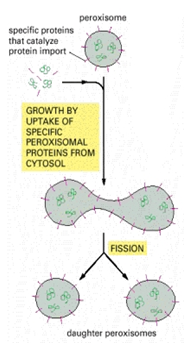
Figure 1 Production of new peroxisomes. The figure has been printed with permission from Molecular Biology of the Cell. 4th edition. Alberts B, Johnson A, Lewis J, et al. New York: Garland Science; 2002.
Functions:
1. Hydrogen peroxide metabolism and detoxification: Peroxisomes are so-called, because they usually contain one or more enzymes (D-amino acid oxidase and urate oxidase) that use molecular oxygen to remove hydrogen atoms from specific organic substrates (R) in an oxidative reaction that produces hydrogen peroxide (H2O2): RH2+O2 ---- R + H2O2
This type of oxidative reaction is particularly important in liver and kidney cells, whose peroxisomes detoxify various toxic molecules that enter the blood stream. Almost half of alcohol one drinks is oxidized to acetaldehyde in this way. However, when excess H2O2 accumulates in the cell, catalase converts H2O2 to H2O : 2H2O2 ------- 2H2O + O2
Catalase also utilizes the H2O2 generated by other enzymes in the organelle to oxidize a variety of other substrates like phenols, formic acid, formaldehyde, and alcohol. This type of oxidative reaction occurs in liver and kidney cells, where the peroxisomes detoxify various toxic molecules that enter the bloodstream.
2. Photorespiration: In green leaves, there are peroxisomes that carry out a process called photorespiration which is a light-stimulated production of CO2 that is different from the generation of CO2 by mitochondria in the dark. In photorespiration, glycolic acid a two-carbon product of photosynthesis is released from chloroplasts and oxidized into glyoxylate and H2O2 by a peroxisomal enzyme called glycolic acid oxidase. Later on, glyoxylate is oxidized into CO2 and formate:
CH2OH. COOH + O2 ---------- CHO – COOH + H2O2
CHO — COOH + H2O2 -------- HCOOH + CO2+ H2O
3. Fatty acid oxidation: A major function of the oxidative reactions performed in peroxisomes is the breakdown of fatty acid molecules. In mammalian cells, β oxidation occurs in both mitochondria and peroxisomes; in yeast and plant cells, however, this essential reaction occurs exclusively in peroxisomes. Peroxisomal oxidation of fatty acids yield acetyl groups and is not linked to ATP formation. The energy released during peroxisomal oxidation is converted into heat, and the acetyl groups are transported into the cytosol, where they are used in the synthesis of cholesterol and other metabolites. In most eukaryotic cells, the peroxisome is the principal organelle in which fatty acids are oxidized, thereby generating precursors for important biosynthetic pathways. In contrast with the oxidation of fatty acids in mitochondria, which produces CO2 and is coupled to the generation of ATP, peroxisomal oxidation of fatty acids yield acetyl groups and is not linked to ATP formation. The energy released during peroxisomal oxidation is converted into heat, and the acetyl groups are transported into the cytosol, where they are used in the synthesis of cholesterol and other metabolites.
4. Formation of plasmalogens: An essential biosynthetic function of animal peroxisomes is to catalyze the first reactions in the formation of plasmalogens, which are the most abundant class of phospholipids in myelin (Figure 2). Deficiency of plasmalogens causes profound abnormalities in the myelination of nerve cells, which is one reason why many peroxisomal disorders lead to neurological disease.