Mitochondria
Structure and Function
The mitochondria were first observed by Kolliker in 1850 as granular structures in the striated muscles. Mitochondria are called the 'powerhouse of the cell'. They are intracellular organelles found in almost all eukaryotic cells having bilayered membranes. Most eukaryotic cells contain many mitochondria, which occupy up to 25 percent of the volume of the cytoplasm. These crucial organelles, the main sites of ATP production during aerobic metabolism, are generally exceeded in size only by the nucleus, vacuoles, and chloroplasts. They are responsible for aerobic metabolism through oxidative phosphorylation, which leads to energy production in the form of adenosine triphosphate (ATP). Mitochondria contain a number of enzymes and proteins that help in processing carbohydrates and fats obtained from food we eat to release energy. Each human cell contains on average hundreds to thousands of mitochondria. The exception is mature red blood cells, which rely exclusively on anaerobic metabolism and contain no mitochondria. Figure 3 gives the schematic representation of a typical mitochondria.
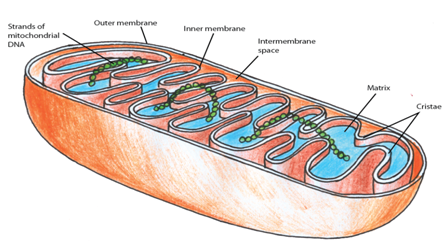
Figure 3: Schematic representation of mitochondria
Localisation:
Mitochondria are present in all eukaryotic cells. They move autonomously in the cytoplasm, so they generally have uniform distribution in the cytoplasm, but in many cells their distribution is restricted. The distribution and number of mitochondria can be correlated with type of function the cell performs. Typically mitochondria with many cristae are associated with mechanical and osmotic work situations, where there are sustained demands for ATP e.g., between muscle fibres, in the basal infolding of kidney tubule cells, and in a portion of inner segment of rod and cone cells of retina. Myocardial muscle cells have numerous large mitochondria called sarcosomes that reflect the great amount of work done by these cells. Often mitochondria occur in greater concentrations at work sites, for example, in the oocyte of Thyone briaeus, rows of mitochondria are closely associated with RER membranes, where ATP is required for protein biosynthesis. Mitochondria are particularly numerous in regions where ATP-driven osmotic work occurs, e.g., brush border of kidney proximal tubules, the infolding of the plasma membrane of dogfish salt glands and Malpighian tubules of insects, the contractile vacuoles of some protozoans as Paramecium. Non-myelinated axons contain many mitochondria that are poor ATP factories, since each has only single cristae. In this case, there is a great requirement for monoamine oxidase, an enzyme present in outer mitochondrial membrane that oxidatively deaminates monoamines including neurotransmitters (acetylcholine).
Orientation:
The mitochondria have definite orientation. For example, in cylindrical cells the mitochondria
usually remain orientated in basal apical direction and lie parallel to the main axis. In leucocytes, the mitochondria remain arranged radially with respect to the centrioles. As they move about in the mitochondria form long moving filaments or chains, while in others they remain fixed in one position where they provide ATP directly to a site of high ATP utilization, e.g., they are packed between adjacent myofibrils in a cardiac muscle cell or wrapped tightly around the flagellum of sperm.