Cell Organelles
Nucleus
Nucleus means kernel and was the first organelle to be discovered. It was discovered and named by Robert Brown in 1833 in the plant cells and is recognized as a constant feature of all animal and plant cells. Certain eukaryotic cells such as the mature sieve tubes of higher plants and mammalian erythrocytes contain no nucleus. It is the largest cellular organelle in eukaryotes. Prokaryotic cells lack nucleus and is complemented by nucleoid. In mammalian cells, the average diameter of the nucleus is approximately 6 micrometers (μm), occupying about 10% of the total cell volume. The contents of the nucleus are DNA genome, RNA synthetic apparatus, and a fibrous matrix. It is surrounded by two membranes, each one a phospholipid bilayer containing many different types of proteins. The inner nuclear membrane defines the nucleus itself. In most cells, the outer nuclear membrane is continuous with the rough endoplasmic reticulum, and the space between the inner and outer nuclear membranes is continuous with the lumen of the rough endoplasmic reticulum. The two nuclear membranes appear to fuse at nuclear pores, the ringlike complexes composed of specific membrane proteins through which material moves between the nucleus and the cytosol. It contains cell's genetic material, organized as multiple long linear DNA molecules in complex with histones, to form chromosomes. The genes within these chromosomes are the cell's nuclear genome. The function is to maintain the integrity of the genes that controls the activities of the cell by regulating gene expression. The schematic presentation of nucleus is in Figure 1.
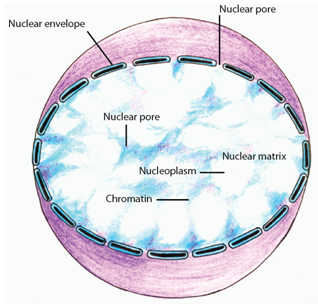
Figure 1: The schematic representation of nucleus.
In a growing or differentiating cell, the nucleus is metabolically active, replicating DNA and synthesizing rRNA, tRNA, and mRNA. Within the nucleus mRNA binds to specific proteins, forming ribonucleoprotein particles. Most of the cell’s ribosomal RNA is synthesized in the nucleolus, a subcompartment of the nucleus that is not bounded by a phospholipid membrane. Some ribosomal proteins are added to ribosomal RNAs within the nucleolus as well. The finished or partly finished ribosomal subunits, as well as tRNAs and mRNA-containing particles, pass through a nuclear pore into the cytosol for use in protein synthesis. In a nucleus that is not dividing, the chromosomes are dispersed and not dense enough to be observed in the light microscope. Only during cell division are individual chromosomes visible by light microscopy. In the electron microscope, the nonnucleolar regions of the nucleus, called the nucleoplasm,can be seen to have dark and light staining areas. The dark areas, which are often closely associated with the nuclear membrane, contain condensed concentrated DNA, called heterochromatin. Fibrous proteins called lamins form a two-dimensional network along the inner surface of the inner membrane, giving it shape and apparently binding DNA to it. The breakdown of this network occurs early in cell division.
Cell Nucleus: Ultrastructure
The structure of a cell nucleus consists of a nuclear membrane (nuclear envelope), nucleoplasm, nucleolus, and chromosomes. Nucleoplasm, also known as karyoplasm, is the matrix present inside the nucleus. Following section discusses in brief about the several parts of a cell nucleus.
a. Nuclear Membrane
It is a double-membrane structure each 5–10 nm thick . Numerous pores occur in the envelope, allowing RNA and other chemicals to pass, but not the DNA. Because the nuclear membrane is impermeable to most molecules, nuclear pores are required to allow movement of molecules across the envelope. These pores cross both of the membranes, providing a channel that allows free movement of small molecules and ions. The movement of larger molecules such as protein requires active transport regulated by carrier proteins. Figure 2 illustrates the nuclear membrane. The nuclear envelope (or perinuclear cisterna) encloses the DNA and defines the nuclear compartment of interphase and prophase nuclei.
The spherical inner nuclearmembrane contains specific proteins that act as binding sites for the supporting fibrous sheath ofintermediate filaments (IF), called nuclear lamina. Nuclear lamina has contact with the chromatin (or chromosomes) and nuclear RNAs. The inner nuclear membrane is surrounded by the outer nuclear membrane, which closely resembles the membrane of the endoplasmic reticulum, that is continuous with it. Like the membrane of the rough ER, the outer surface of outer nuclear membrane is generally studded with ribosomes engaged in protein synthesis. The proteins made on these ribosomes are transported into space between the inner and outer nuclear membrane, called perinuclear space. The perinuclear space is a 10 to 50 nm wide fluid-filled compartment which is continuous with the ER lumen and may contain fibres, crystalline deposits, lipid droplets or electrondense material. Nuclear pores and nucleocytoplasmic traffic. The nuclear envelope in all eukaryotic forms, from yeasts to
humans, is perforated by nuclear pores which have the following structure and function: