Proteins involved in the initiation of DNA replication
Many proteins play part in initiation of DNA replication. The events are summarized in the following text and Figure 5.
1. A large multiprotein complex (origin recognition complex/ORC), binds to the replication origin throughout the cell cycle.
2. In late mitosis and early G1, proteins Cdc6 and Cdt1 bind to the ORC at origin and load a group of six related proteins called the Mcm proteins. This protein complexes leads to origin of replication.
3. The six Mcm proteins form a ring around the DNA and serves as the major DNA helicase causing unwinding of DNA when DNA synthesis begins and replication forks move out of the origin.
4. The activation of S-Cdk in late G1 causes assembly of several other protein complexes at the origin causing formation of large pre-initiation complex that unwinds the helix and begins DNA synthesis.
5. Parallel action of S-Cdk triggers the disassembly of some pre-RC components at the origin. Cdk's phosphorylates both the ORC and Cdc6.
6. Inactivation of APC in late G1 occurs and in turn turns off pre-RC assembly. In late mitosis and early G1 the APC triggers the destruction of a protein called geminin that binds and inhibits the Cdt1 protein.
7. S and M-Cdk activity along with low activity of APC block pre-RC formation at S-phase and thereafter.
8. After the end of mitosis APC activation leads to the inactivation of Cdks and destruction of geminin. Pre-RC components are dephosphorylated and Cdt1 is activated leading to pre-RC assembly to prepare the cell for the next S-phase.
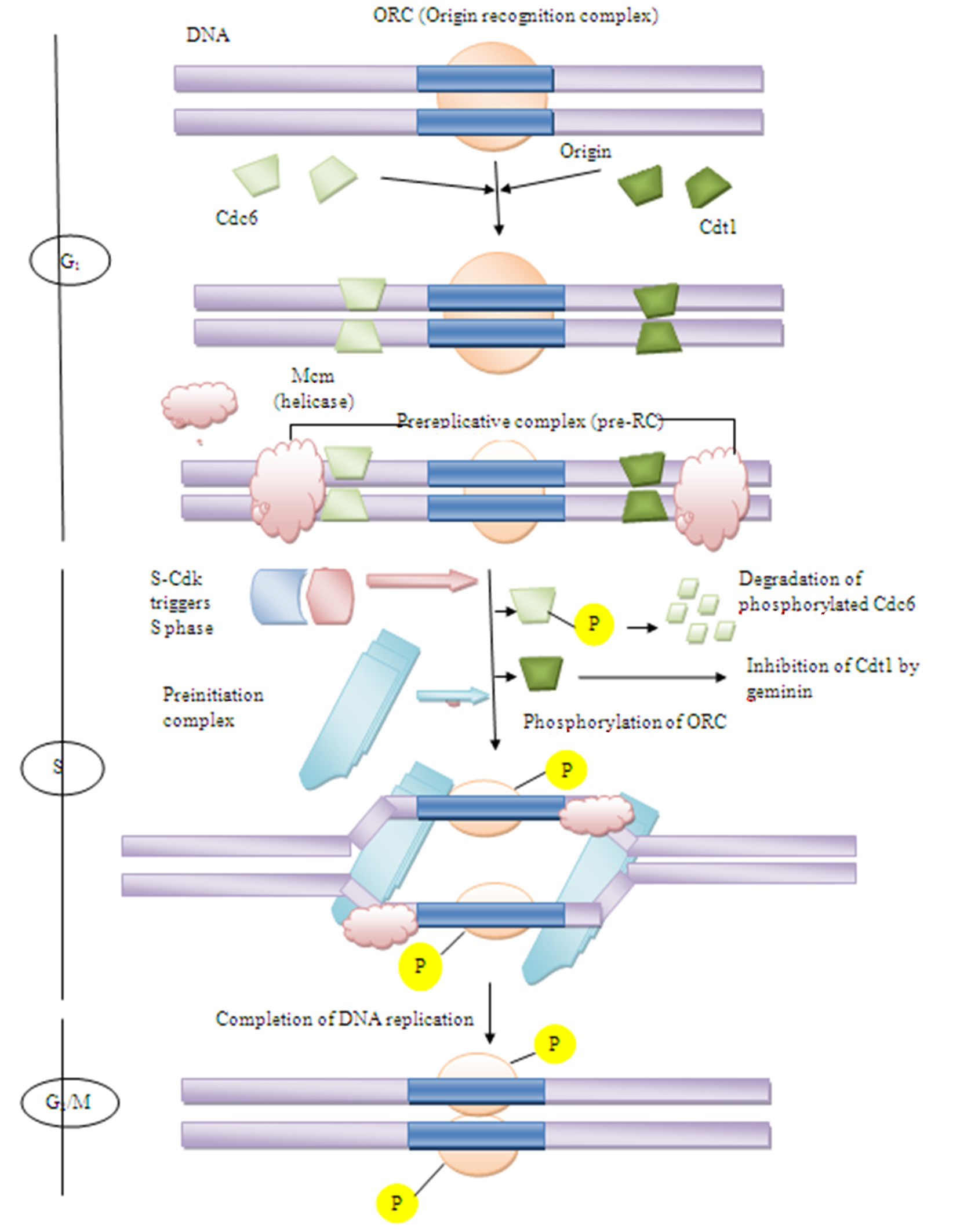
Figure 5: Control of the initiation of DNA replication.