Non-Isolated Singular Point: If  is not analytic at
  and if there is no punctured neighborhood
  such that
  is analytic in
  then the point
  is called a non-isolated singular point of
  .
.
Examples: We have seen that in the previous example, the point  is an isolated singular point of
  if
if  is a non-zero integer. Whereas the point
  is a non-isolated singular point of
  . For the principal branch
  of the logarithm function, all non-positive real numbers are non-isolated singular points.
Classification of Isolated Singularity: Suppose that the function  has an isolated singularity at the point
  . Based on the behaviour of
  as
as  approaches
  , the isolated singular point
  is classified into three kinds, namely, removable singularity, pole and essential singularity as follows:
Definition: Let  have an isolated singularity at
  . Then,
1.
the point  is a removable singularity if
 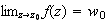 where
where  .
.
2.
the point  is a pole if
 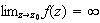 .
.
3.
the point  is an essential singularity if it is neither a pole nor a removable singularity.