Singular Point: A point  is said to be a singular point of a function
  if
if  is not analytic at
  and every neighborhood
  of the point
  contains at least one point at which
  is analytic.
We say it as the function  has a singularity at
  .
.
Examples: The point  is a singular point of
 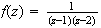 . The point
  where
where  is a singular point of
  . The points
  for
for  are singular points of
  .
.
Isolated Singular Point: If  is not analytic at
  and
and  is analytic in the punctured neighborhood
  for some
  then the point
  is called an isolated singular point of
  .
.
Examples: The points  and
and  are isolated singular points of
 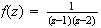 . The point
  is an isolated singular point of the function
  . Similarly, the function
  has an isolated singularity at
  . The point
  is an isolated singular point of
  if
if  is a non-zero integer