Four-probe method:
A high impedance current source is used to supply current through the outer two probes, which sets up an electric field in the sample. The potential difference developed across the inner probes, which draw no current due to the high input impedance voltmeter in the circuit, is measured through two inner probes.
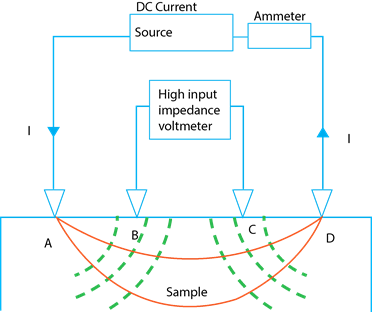
Figure 24.04: Electric field and equipotential lines in four-probe method
Quiz 24:
(Q24.1) Is it possible to classify the materials using bandgap in the same way as shown in Figure 24.01?
(Q24.2) What are the conditions assumed to be constant while measuring resistance? Why?
(Q24.3) How does the multimeter work for measuring the wide range of resistance?
(Q24.4) Why does the two-probe method fail while measuring low resistance materials?
(Q24.5) How does the four-probe method address the issues faced in two-probe method?
(Q24.6) Can we swap the voltage and current probes in four-probe setup? What are the consequences occur by doing so?