Two-probe method:
Let us consider a long thin wire of length, L and uniform cross section, A or the materials with a long parallelepiped shape with uniform cross section as shown in Figure 24.02.
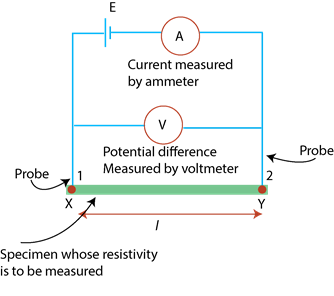
Figure 24.02: Schematic of two-probe setup.
The resistivity of the wire can be measured by measuring voltage drop across the wire due to passage of known current supplied by the battery E through the probes 1 and 2.
The potential difference (V) between the two contacts at the ends of the wire can be measured by a voltmeter. Therefore, the resistivity of the wire is, i.e.,

In general, we use a multimeter for measuring the resistance of the materials. The typical range of resistance measured using the multimeter is 1Ω to 2MΩ, but varies with the models and company. While the two-probe method is a simple and advantageous method for measuring resistance above 1Ω directly, this method suffers from certain issues.